
Last updated November 15, 2026
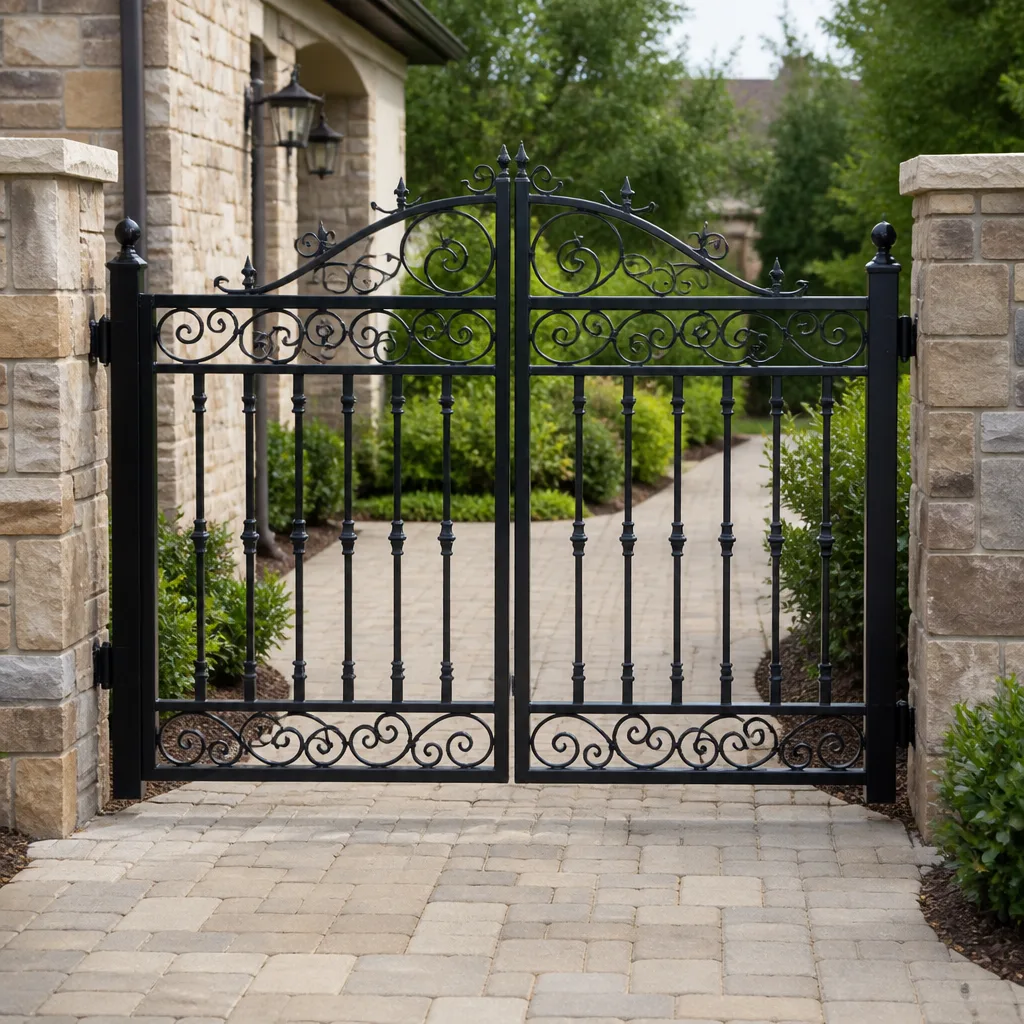 Wrought iron
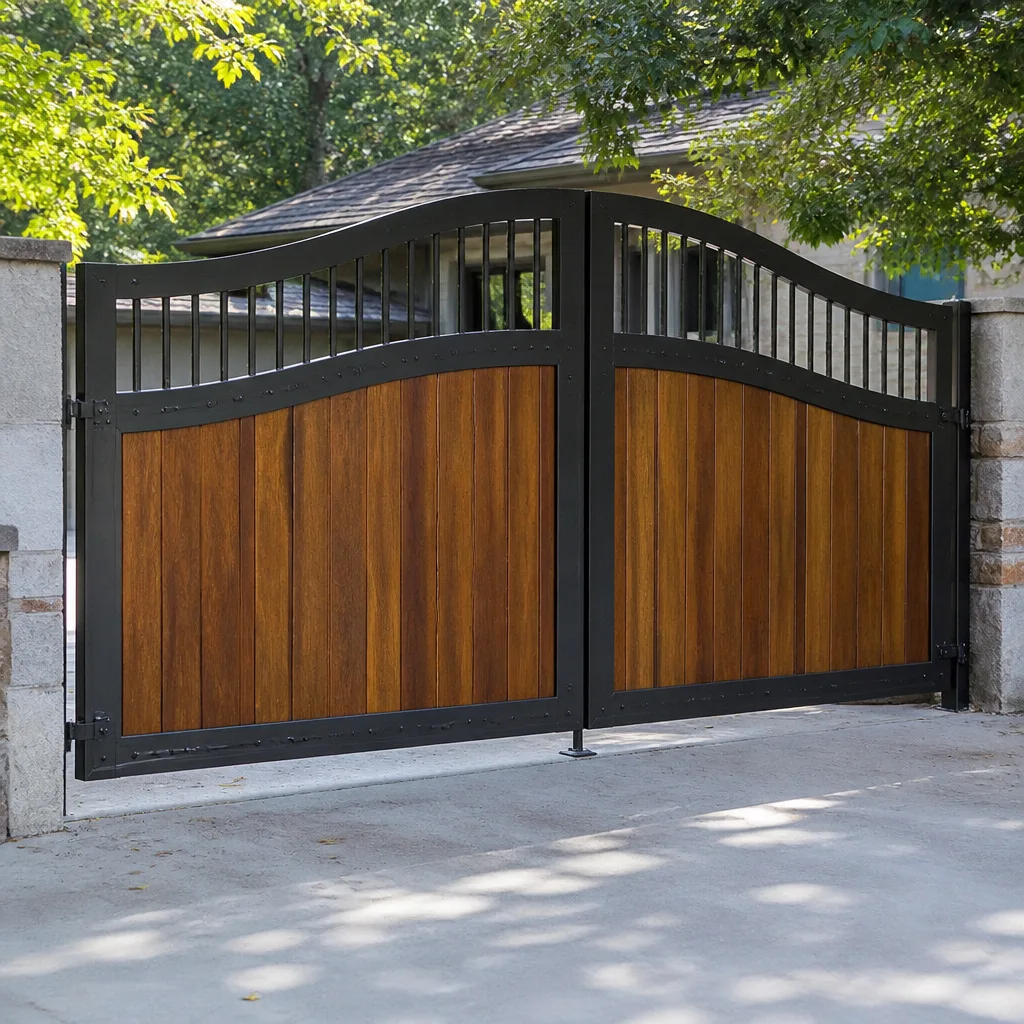 Wood & steel frame
 Farm & ranch
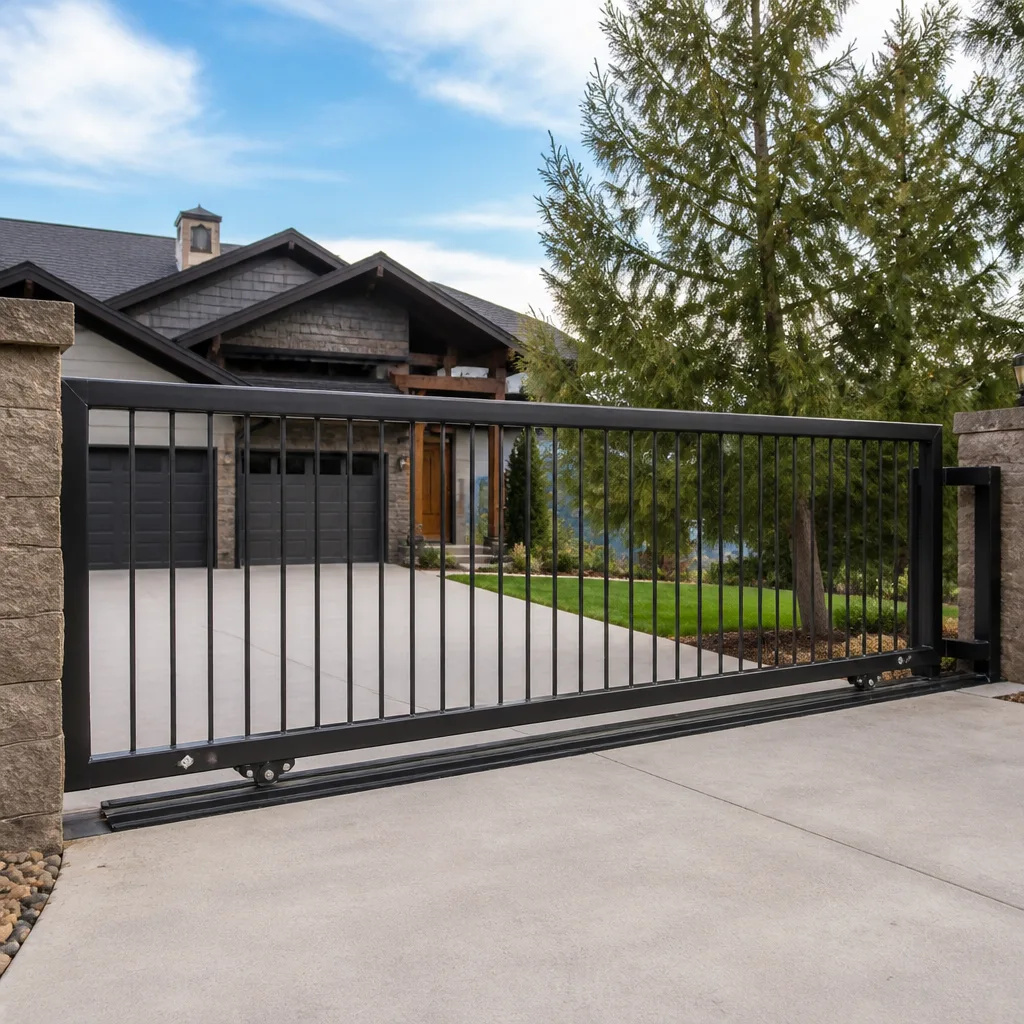 Sliding driveway gates
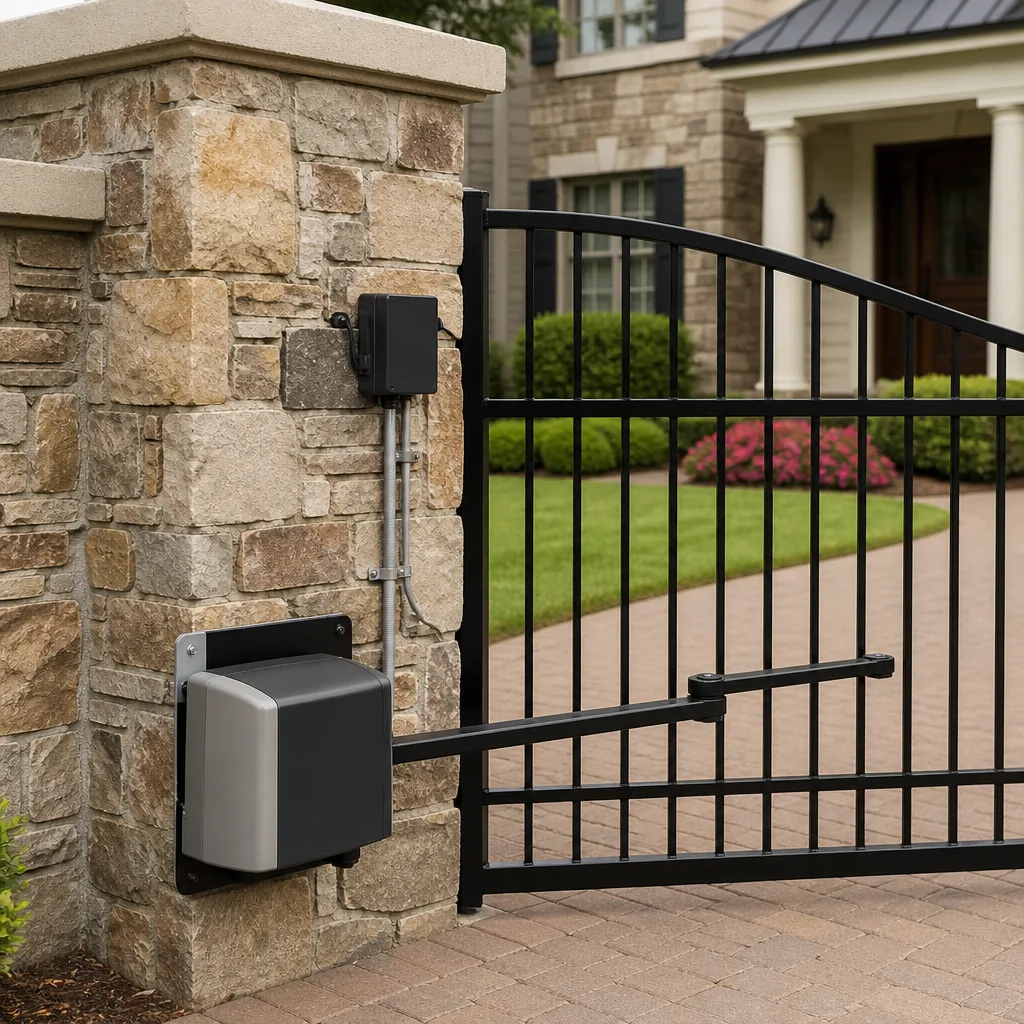 LiftMaster operators
Free on-site gate assessment - hinges, posts, and your LiftMaster or Nice gate operator checked before anything is quoted
The assessment is free and the quote is the invoice.
Get your free estimateThe Complete Guide to Gate Repair in Elgin
Most people call a gate technician when the gate stops moving. By then, the failure has usually been writing itself for months. A gate that drags, hesitates at one point in its travel, or needs a second push on the remote is telling you something specific about which of its five mechanical systems is failing. A slow gate often means the operator is working several times harder than it was designed to, and a motor rated for a decade of duty can wear out in a fraction of that when it’s fighting a hinge, a track, or a sagging post. This guide maps every common failure to the system behind it, explains how Elgin’s clay-heavy soil changes what goes wrong, and shows you how to document a problem before you call so the right fix happens the first time.
Quick Answer
Gate repair in Elgin almost always involves one of five systems: the operator (motor and gearbox), the hinge or track hardware, the control board, the safety sensors, or the power supply. Which system is failing determines how urgent the repair is and whether fixing or replacing makes more sense. A slow-moving gate is rarely the motor’s fault on its own; it’s usually a mechanical drag that the operator is compensating for until something burns out.
Styles & brands we work with
- Wrought iron
- Wood & steel frame
- Farm & ranch
- Sliding driveway gates
- LiftMaster operators
Table of Contents
- The Five Mechanical Systems in Any Elgin Gate Setup
- Symptom-to-System Map: What Your Gate Is Telling You
- How Elgin’s Clay-Heavy Soil Affects Post Stability and Gate Alignment
- Sliding vs. Swing Gates: Fundamentally Different Failure Patterns
- Time-Sensitive Repairs vs. What You Can Monitor for Weeks
- How to Document a Failure Before You Call
- Why Brand Familiarity Shortens the Repair Timeline
- Repair or Replace? A Simple Decision Framework
The Five Mechanical Systems in Any Elgin Gate Setup
Every automatic gate, whether it’s a residential swing gate or a commercial slide gate at a property entrance, depends on five separate systems working together. When one degrades, the others compensate until they can’t. That compensation is what turns a small problem into a full failure. Understanding the five systems is the foundation of diagnosing your own gate before you pick up the phone.
1. The operator. This is the motor and gearbox assembly that actually moves the gate. On swing gates it’s typically an arm mounted to a pillar; on slide gates it’s a unit that drives a rack along the gate’s base. The operator is the most expensive component, and it’s almost never the first thing to fail. It fails because something else wore out and the operator spent months working harder than it should. A Mighty Mule residential operator and a BFT commercial unit have very different duty ratings, but both wear prematurely when the gate is dragging.
2. Hinge or track hardware. Swing gates ride on hinges; slide gates ride on a track and rollers or cantilever wheels. This is where most failures actually begin. Worn hinges let a swing gate sag until the operator has to lift it through the swing. A misaligned track or a flattened roller turns a slide gate into a resistance problem the motor can’t overcome indefinitely.
3. The control board. The logic board receives signals from the remote, the keypad, the sensors, and the loop detector, then tells the operator what to do. Boards fail from power surges, moisture, insects, and age. A board problem often looks like a motor problem: the gate stops mid-travel, responds to nothing, or cycles unpredictably.
4. Safety sensors and safety edges. Photocell beams, loop detectors, and physical safety edges are what stop a gate from closing on a person, a vehicle, or an obstruction. When one of these fails, the gate may refuse to close, close and immediately reopen, or reverse randomly. This is one of the few categories where a failure is a genuine safety issue and not just an inconvenience.
5. The power supply. Transformers, batteries, solar panels on remote gates, and the low-voltage wiring that connects everything. A weak battery or a failing transformer produces symptoms that mimic almost every other failure: erratic movement, resets, a gate that works sometimes and not others.
Symptom-to-System Map: What Your Gate Is Telling You
The fastest way to understand a gate failure is to match the symptom to the system. Here’s how the common symptoms stack up against the five systems, based on the patterns our technicians have seen across residential and commercial gates throughout Elgin and the surrounding neighborhoods.
- Gate moves slowly, or hesitates at one point. Mechanical drag, most often worn hinges (swing) or a flattened roller or dirty track (slide). The operator is compensating. Address this before the motor burns out.
- Gate stops halfway and won’t continue. Most often the control board, a limit switch that has drifted out of position, or a safety sensor triggering incorrectly. Sometimes a failing battery under load.
- Gate opens but won’t close (or closes and immediately reopens). Safety sensors or safety edges. The gate’s logic believes something is in the way. Check for obstruction, then suspect the sensor alignment or the edge itself.
- Remote works sometimes, not others. Battery, receiver, or interference. Less often a failing board. Ghost Controls and LiftMaster residential systems are both sensitive to battery condition.
- Gate doesn’t respond at all. Power supply, a tripped breaker, a dead battery, or a board that has failed. Check power first, then the board.
- Gate grinds, squeals, or makes new noise. Mechanical. Hinges, rollers, track, or gearbox. Noise always means friction, and friction always means the operator is working harder than designed.
- Swing gate drags or hits the ground at one end. Post movement, hinge wear, or both. Very common in Elgin because of the soil. See the clay soil section below.
Notice that “the motor is broken” almost never appears on that list. It happens, but it’s rarer than most homeowners expect. When a FAAC or LiftMaster operator actually fails, it’s usually the end of a chain of smaller problems that went unaddressed.
How Elgin’s Clay-Heavy Soil Affects Post Stability and Gate Alignment
Elgin sits on heavy clay soil, and that single fact changes gate repair in Elgin in ways that don’t apply in sandier suburban areas. Clay expands when it’s wet and contracts when it dries, and it does both slowly and repeatedly across the seasons. A gate post set in clay moves over time in a way a post set in sand or gravel generally doesn’t. That movement is the root cause behind a large share of the alignment and drag complaints we diagnose in Elgin.
What that means in practice:
Swing gates drift out of plumb. A hinge post that leans even a fraction of an inch throws off the entire swing arc. The gate starts to sag at the latch end, then begins to drag on the ground or scrape the operator arm. Homeowners often assume the hinge has worn out when the real problem is that the post has shifted. Replacing hinges on a moving post doesn’t fix anything for long.
Slide gates lose their level. A slide gate’s track or cantilever system depends on staying level. When one end of the base settles into softening clay after a wet stretch, the gate starts to bind at one point along its travel. That binding point is the symptom; the settling base is the cause.
Operators get blamed for what the ground did. The operator on a shifted gate has been fighting the misalignment for months. By the time it fails, the post or track problem is invisible to the homeowner, and the motor looks like the culprit. A proper diagnosis checks alignment and footing before it condemns an operator.
If your Elgin gate has started dragging, catching, or hesitating at one point in its travel, the alignment is the first thing to check. Proper footing depth matters more here than in many parts of the country, and any repair that ignores the ground will come back. When you’re ready to have it looked at, our gate repair team diagnoses the footing and alignment alongside the hardware instead of just replacing the part that finally gave out.
Sliding vs. Swing Gates: Fundamentally Different Failure Patterns
Sliding gates and swing gates fail differently enough that they deserve separate treatment. The systems overlap, but the wear patterns, the common failure points, and how long a repair takes all differ. Knowing which type you have and how it usually fails makes the conversation with a technician faster and saves you from paying for parts that weren’t the problem.
Swing gates. A swing gate pivots on hinges and is driven by an arm or an underground operator. Its most common failure is alignment: hinge wear, post movement (especially in clay), and arm mounting coming loose. Safety is a bigger concern on swing gates because a moving gate swings through an arc where people and vehicles pass. Photocells and safety edges need to be working correctly, and a swing gate that closes without sensing an obstruction is a genuine hazard. Repair timelines for a swing gate usually revolve around hardware and alignment work rather than electronics.
Sliding gates. A slide gate runs along a track or a cantilever system and is driven by a rack-and-pinion operator. Its most common failures are track-related: debris in the track, flattened rollers, and a base that has settled or shifted. Electronics play a bigger role on slide gates because they typically use loop detectors buried in the driveway as well as photocells. Loop detector failures produce very specific symptoms, often a gate that opens for a vehicle leaving but won’t open for one arriving, or vice versa. Slide gate repairs tend to take longer when the track or base is involved, because those jobs are physical work, not a board swap.
One practical difference: slide gate failures are more likely to be gradual. A slide gate often gives you weeks of warning in the form of slowing travel or noise before it stops. Swing gate failures can be more abrupt, especially when a post shifts suddenly or a hinge finally gives way after months of wear. That difference matters for how you plan the repair.
Time-Sensitive Repairs vs. What You Can Monitor for Weeks
Not every gate problem needs a technician today. Some do, and treating a safety failure as a “wait and see” is the one thing we’d push back on. Sorting failures by urgency helps you spend your repair budget where it matters and avoid a panic call for something that has been quietly degrading for a month.
Time-sensitive (address promptly):
- Safety sensor or safety edge failure. A gate that closes without detecting an obstruction can injure a person or damage a vehicle. Get this looked at quickly.
- Gates that reverse randomly or close and immediately reopen. That’s often a sensor or limit switch issue and the same safety concern applies.
- A gate that has shifted suddenly, or a post that has visibly moved. Continuing to run the operator against a shifted gate accelerates wear and can damage the operator.
- Grinding or metal-on-metal noise that has just started. Early intervention is cheaper than waiting for a component to fail outright.
Can be monitored for weeks:
- A remote with occasional hesitation. Battery, receiver, or interference. Watch it, note when it happens, and it’ll likely be an easy fix when you do call.
- A gate that’s slightly slower than it used to be, with no noise and no binding. Track it. If it degrades further, that tells you something.
- Cosmetic wear, faded paint, or a remote that needs to be held at a slightly different angle. None of it is urgent.
When a gate does fail in a way that blocks access to your property, we can help. Call (833) 722-3856. We answer 24/7. Fast dispatch from 7am to 7pm, Sunday through Friday. A call outside dispatch hours is booked into the next opening. When it’s an electric gate that won’t respond, our electric gate repair service covers control boards, loop detectors, safety sensors, and automation logic, not just the mechanical side.
How to Document a Failure Before You Call
A few minutes of note-taking before you call a technician can shorten the repair by hours and sometimes save you a return visit. The goal is to give the technician a clear picture of what the gate does versus what it should do, so they arrive with an idea of which system is involved before they’ve even seen the gate. Here’s how to do it.
- Record the exact symptom, not your interpretation. “The gate travels about two-thirds of the way closed, stops, and reverses to open” is far more useful than “the gate is broken.” Describe what you see, not what you think is wrong.
- Note when it happens. Every time, or only sometimes? Only when it’s cold, or wet, or after the gate has been sitting closed for a while? Patterns narrow down the system fast.
- Check for an error code. Many control boards, including LiftMaster and FAAC units, display a flashing LED pattern or a diagnostic code. Photograph it. Even a count of blinking LEDs is useful information.
- Try the manual release (on a gate that’s safe to move manually). Most operators have a manual release. If the gate moves smoothly by hand, the problem is likely electrical or control-side. If the gate is hard to move by hand, the problem is mechanical. Ask a professional if you’re not sure the gate is safe to operate manually.
- Take photos and a short video. One photo of the full gate, one of the operator, one of the control board, and one of the hinges or track. A 15-second video of the gate failing is often the single most useful thing you can hand a technician.
- Write down the brand and model, if visible. The brand name is usually on the operator housing. A photo of the label covers it.
- Note anything that changed recently. New landscaping, a recent storm, a power outage, or a change to the driveway can all be relevant. Clay soil movement often follows a stretch of wet weather.
That documentation also helps you communicate with anyone you call. A technician who knows the brand and sees the symptom pattern before arriving can bring the right parts and allocate the right amount of time. We work on the brands you have, including Mighty Mule and Ghost Controls on the residential side and LiftMaster and BFT on the professional side, so a clear description of your system is genuinely useful.
Why Brand Familiarity Shortens the Repair Timeline
Gate operators are not interchangeable. A control board layout, a limit switch adjustment, and a diagnostic code means something different on a Mighty Mule than it does on a FAAC or a LiftMaster. A technician who works across brands has seen the failure modes of each one many times and can move from symptom to diagnosis faster. That’s why when you call, the brand matters.
We’re familiar with nine gate brands: LiftMaster, FAAC, BFT, Linear, Viking, Ghost Controls, DoorKing, Elite, and Mighty Mule. That range covers entry-level residential DIY-style operators like Mighty Mule and Ghost Controls all the way up to commercial-grade access control like DoorKing and BFT. In practice it means that whether your gate is a residential swing gate at a home in Elgin or a commercial slide gate with a loop detector at a small property, the same team can diagnose it without sending you elsewhere.
The part of brand familiarity that matters most is diagnostic speed. A board that keeps resetting, a limit switch that drifts, a remote that works on one gate but not another: these are things a brand-experienced technician recognizes quickly because they’ve seen the pattern. That’s not a shortcut around the diagnosis. It’s what makes the diagnosis fast and accurate the first time.
We’re independent, not tied to any manufacturer. We service the nine brands above and we won’t claim expertise we don’t have, which means the advice you get is about your gate, not about a product we’re trying to sell you. That’s a big part of why we built the business around gate systems specifically rather than bundling gates into a broader home-service menu.
Repair or Replace? A Simple Decision Framework
One of the most common questions we get on a first call is whether a failing gate should be repaired or replaced. The answer depends less on the gate’s age than on what’s actually failing and how much of the system is still sound. Here’s the framework we use.
- Repair when the operator and gate structure are sound and one system is failing. A single hinge replacement, a safety sensor swap, a control board replacement, or a limit switch adjustment is almost always a repair, regardless of the gate’s age. The rest of the system is doing its job.
- Lean toward repair when the failure is mechanical and everything else is healthy. Worn rollers, a stuck roller, a misaligned track: these are fixable and don’t necessarily signal that the operator is on its way out, as long as the alignment gets corrected.
- Consider replacement when the operator has failed and the gate structure is compromised. A motor that burned out after months of fighting a shifted post is a different conversation than a motor that simply failed. The ground and the hardware need to be addressed or the new operator will fail the same way.
- Consider replacement when the gate is commercial-grade and the control board failure is beyond economic repair. Commercial boards can be expensive on their own, and on an older system the cost of the board can approach the cost of a newer, simpler solution. That’s a decision worth talking through before committing.
- Replace when the gate is a safety risk you can’t repair. A swinging gate with a structural crack in the frame, or a slide gate whose base cannot be made stable with reasonable work, is a different category. Safety first.
The estimate is free, and the price is set per job by the written estimate before any work starts. That means you’ll know whether repair or replacement makes more sense for your gate before you’ve committed to either. If your Elgin gate is in the middle of this decision, a free estimate is the fastest way to get a real answer. Call (833) 722-3856 for that estimate.
Common Mistakes to Avoid
- Replacing the operator when the real problem is the hinges or the post. A new motor on a dragging gate will fail faster than the old one did. Fix the mechanical problem first, then decide whether the operator needs to go.
- Ignoring a gate that drags a little. Drag is the most reliable early warning there is, and it’s almost always cheaper to address than the failure it leads to. The operator is doing extra work for months before it gives out.
- Assuming slow movement is a motor problem. On an automatic gate, slow travel is usually mechanical drag. A technician who diagnoses the symptom rather than the brand will find the actual cause.
- Running a gate with a failed safety sensor because it “still works.” A gate that operates without its safety sensor is not working; it’s just moving. That’s the one failure we treat as urgent regardless of how convenient the gate is right now.
- Over-adjusting a limit switch by trial and error. Limit switches drift, but the right position matters. Repeated trial and error adjustment usually makes things worse, and on some boards it can throw off the board’s travel memory.
- Failing to note the clay soil and alignment when the gate is repaired. In Elgin, a hinge or operator repair on a post that’s actually shifting will come back. The alignment has to be part of the fix, not an afterthought.
- Calling without the brand or model documented. A photo of the operator label and a short video of the failure will save time on the call and help the technician come prepared. It’s a small step with an outsized return.
See the difference
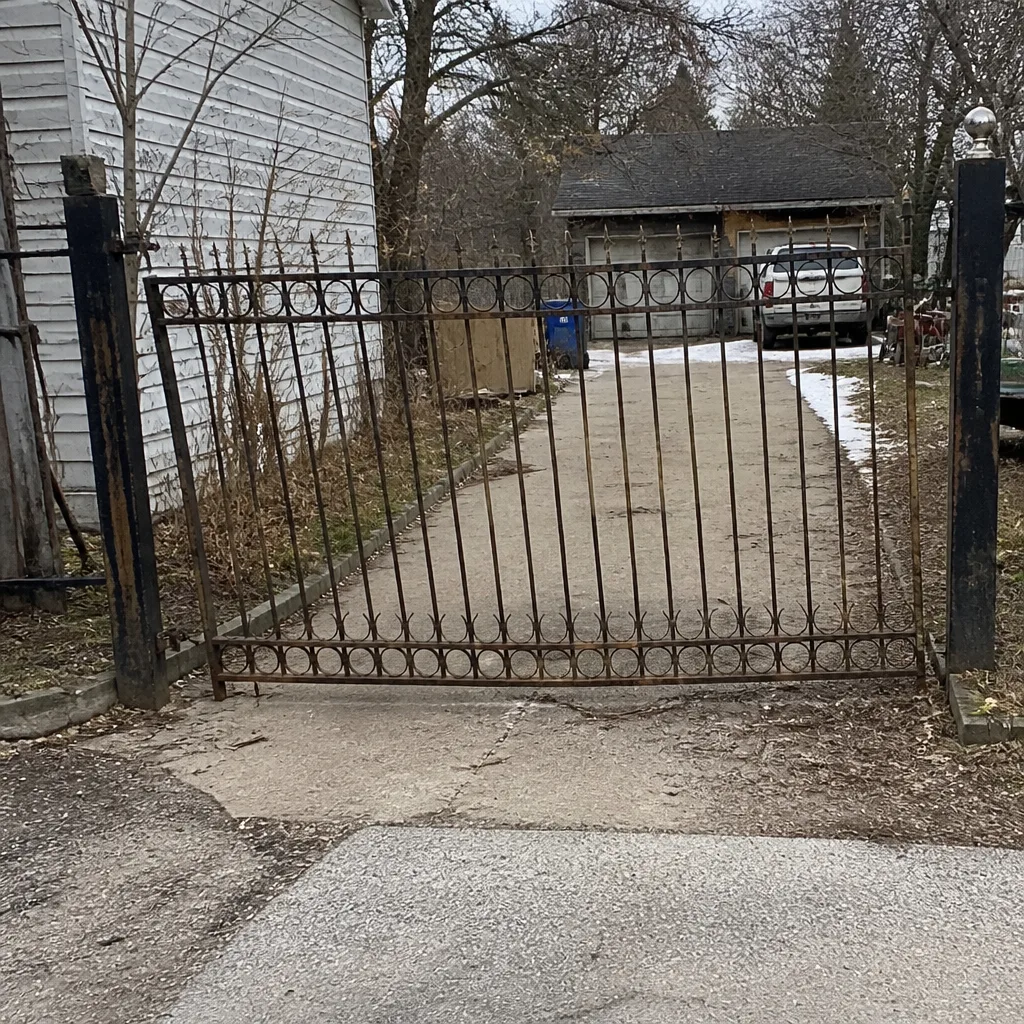 Before
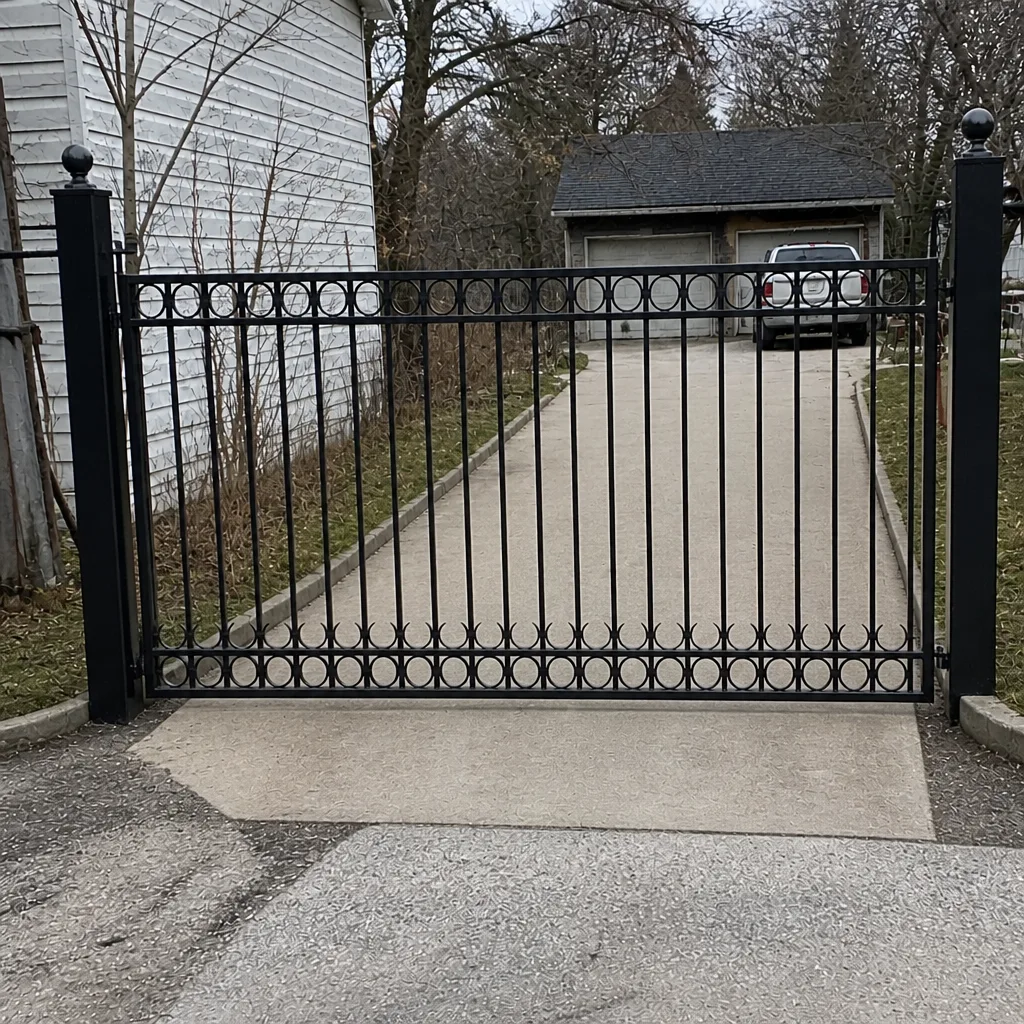 After
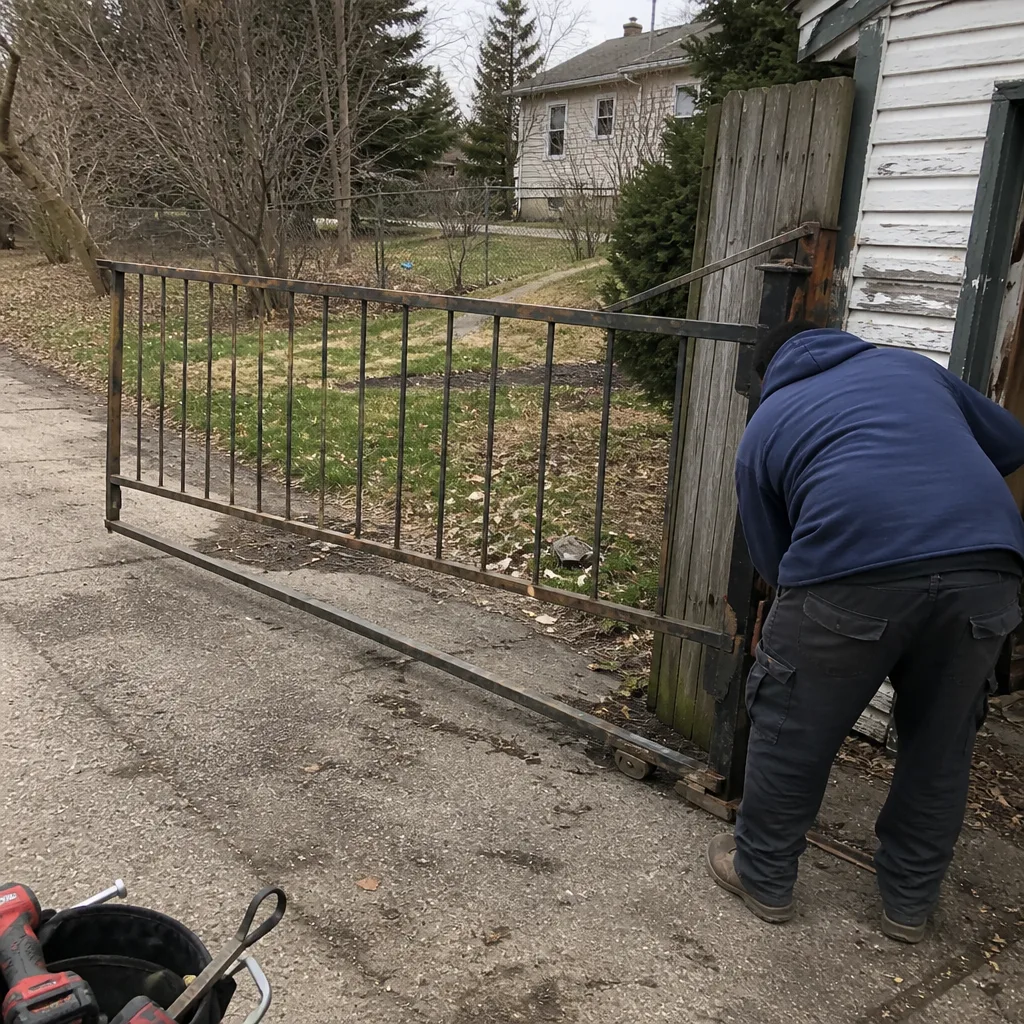 Before
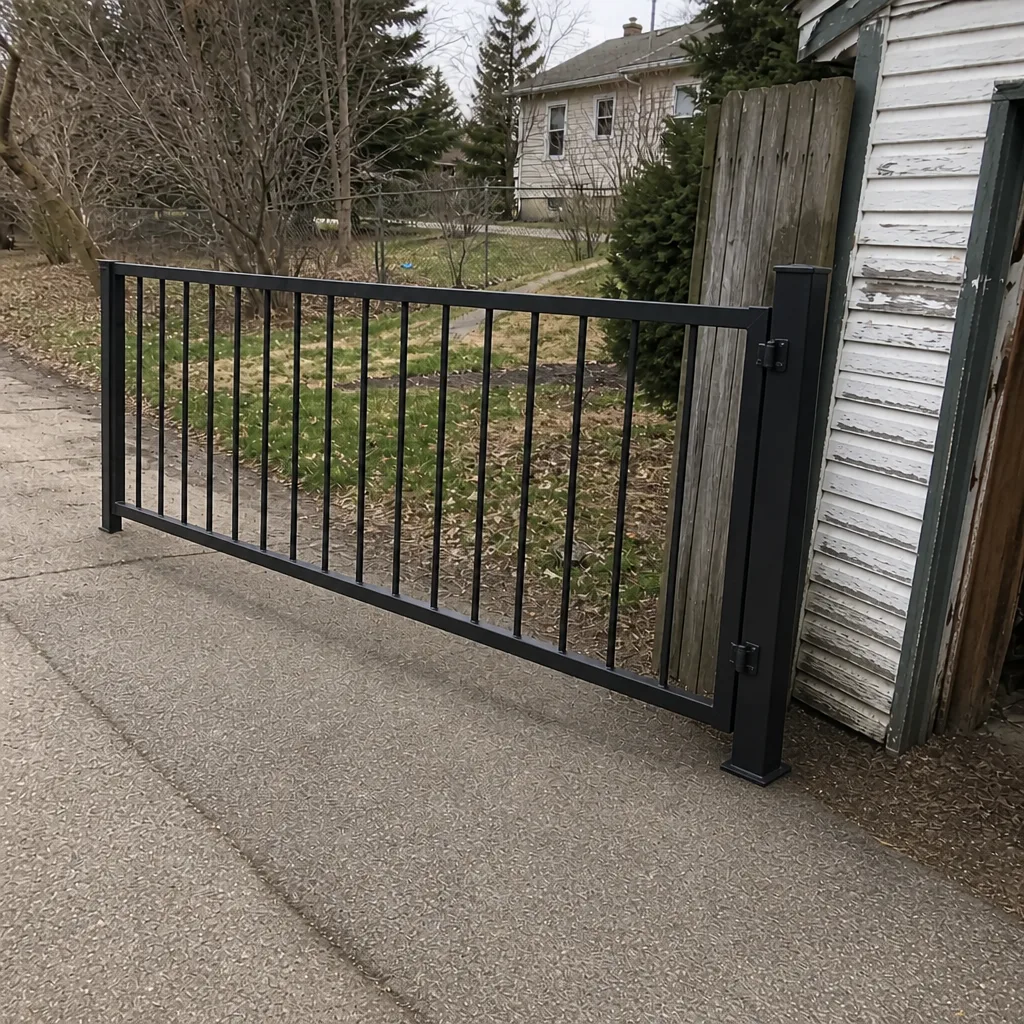 After
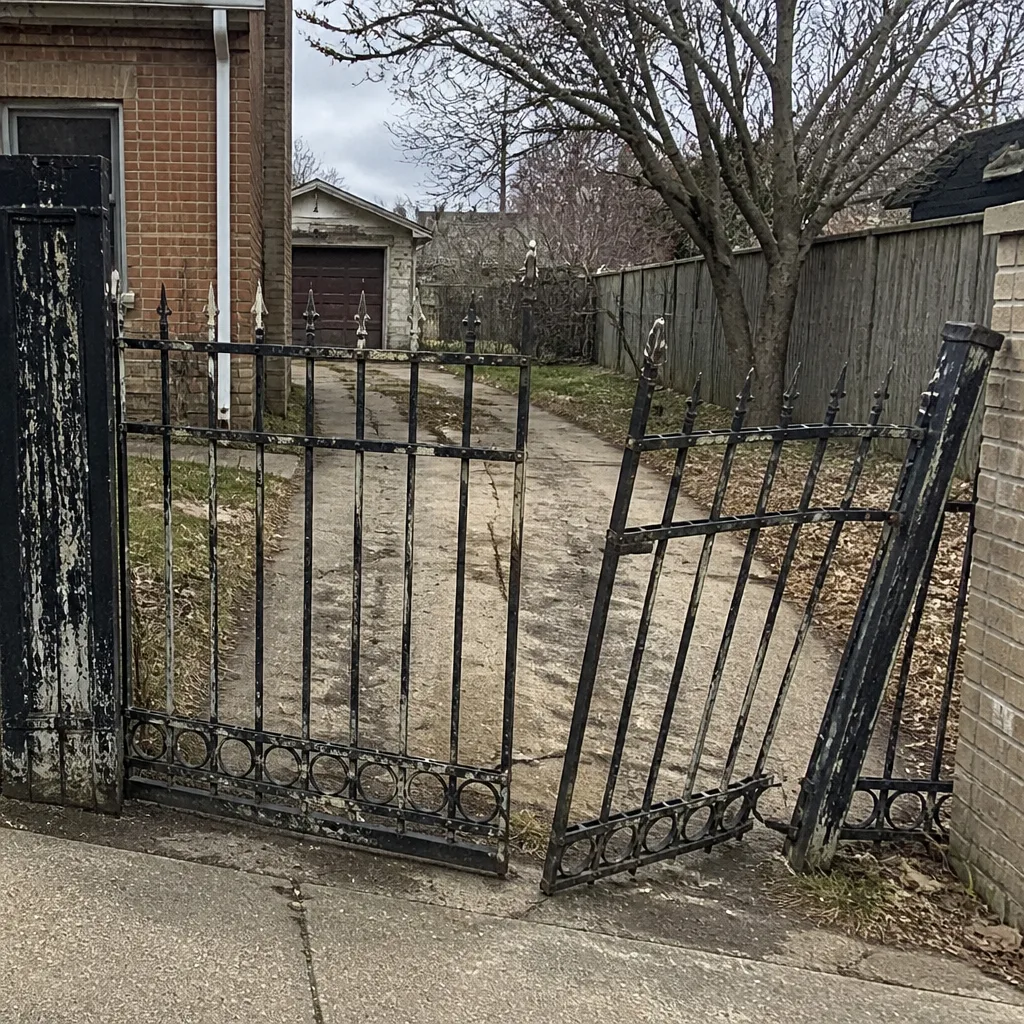 Before
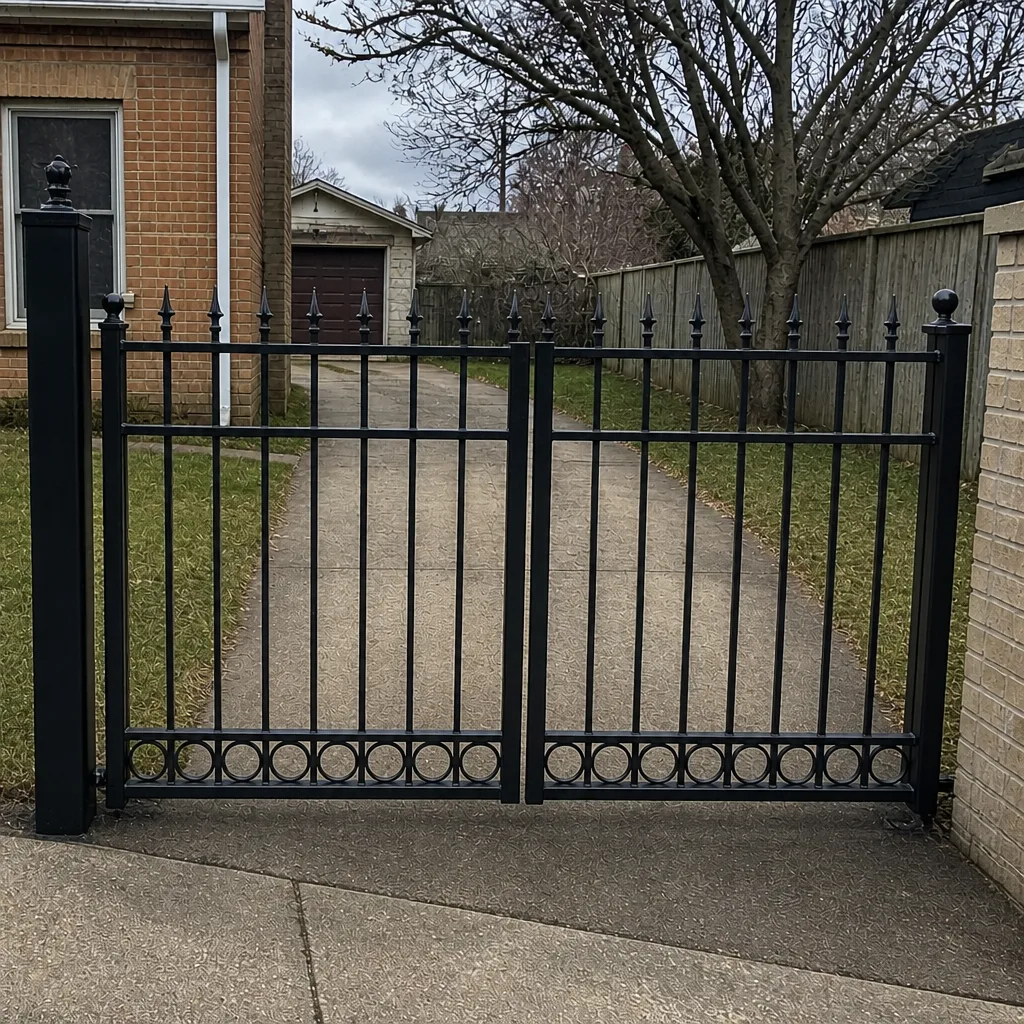 After
When to Call a Professional
Call a professional when the gate is a safety concern, when the operator is involved, or when you’ve tried the obvious things and the gate still won’t move correctly. A failed safety sensor, a gate that reverses randomly, a board that keeps resetting, a post that has visibly shifted, or a motor that no longer responds all warrant a call. If you’re not sure whether the gate is safe to operate manually, that’s also a call. Our technicians have up to 9 years of experience and can diagnose both the electrical and mechanical sides of your system. Gate Repair Elgin offers free estimates in Elgin – call (833) 722-3856. When you’re ready to have a new gate installed rather than repaired, our Gate Repair Elgin team covers installation as well, from residential remotes to commercial access control.
Same-Day Repair
When a gate is down and blocking access, we know the call can’t wait. For repair and emergency work, same-day service is often possible. Call (833) 722-3856 and tell us the brand, the symptom, and what you’ve already tried. We answer 24/7. Fast dispatch from 7am to 7pm, Sunday through Friday. A call outside dispatch hours is booked into the next opening. The price for the repair is quoted and agreed before any work starts, so there are no surprises when the job is done. Installation and new gate projects are handled differently: those jobs are measured, ordered, and scheduled after the on-site estimate.
Frequently Asked Questions
There’s no single answer because the price depends on which of the five systems is failing and what the repair involves. A safety sensor or hinge replacement is a different job from a control board replacement or a post realignment. The price is set per job by the written estimate, and the estimate itself is free. Call (833) 722-3856 for an exact quote – estimates are free.
For repair and emergency work, same-day service is often possible if you call during dispatch hours. We answer 24/7, with fast dispatch from 7am to 7pm, Sunday through Friday. A call outside dispatch hours is booked into the next opening. Call (833) 722-3856 and describe the symptom so we can plan the visit.
A slow gate is almost always a mechanical drag problem, not a motor problem. Worn hinges, a flattened roller, a dirty track, or a shifted post make the operator work much harder than designed. The slow movement is the warning; if you wait for the gate to stop entirely, the repair usually costs more. The alignment is worth checking in Elgin specifically, because clay soil moves posts over time.
They fail differently. Swing gates usually fail because of hinge wear or post movement, which throws off the swing arc. Slide gates usually fail because of track or roller problems, and their electronics tend to play a bigger role because of loop detectors buried in the driveway. Slide gate failures are often more gradual, while swing gate failures can be more abrupt. The repair timeline differs too: track and base work on a slide gate takes longer than a hinge swap on a swing gate.
Yes. We work on those brands and on Linear, Viking, Ghost Controls, DoorKing, and Elite as well. That covers entry-level residential operators through commercial access control. If you’re not sure of the brand, a photo of the operator label is enough for us to identify it. Call (833) 722-3856 for a free estimate.
Elgin sits on heavy clay soil that expands when wet and contracts when dry. That movement shifts gate posts over time, which throws swing gates out of alignment and makes slide gates bind at one point in their travel. A lot of the drag and hesitation problems we see in Elgin trace back to post movement rather than the operator itself. Any repair should check alignment and footing, not just the part that failed. For a full look at our Elgin coverage, see our Elgin page.
The Bottom Line
Most gate failures in Elgin come down to one of five systems, and the symptom tells you which one. Slow movement and drag are mechanical. A gate that closes and reverses is a safety sensor. Erratic behavior that mimics a motor problem is often the control board or the battery. Sorting the symptom to the system lets you answer the real questions: how urgent is this, is it a repair or a replacement, and what should I have ready when I call. Clay soil adds a post-alignment problem that’s specific to Elgin, and checking alignment before replacing parts will save you from a repair that comes back. A few minutes of documentation before you call will shorten the job. When you need a diagnosis, a free estimate is the fastest path to an answer.
Call (833) 722-3856 for a free estimate. We answer 24/7. Fast dispatch from 7am to 7pm, Sunday through Friday. Whether you need electric gate repair or a new installation, our technicians have up to 9 years of experience with the brands and systems you rely on.
Written by the team at Gate Repair Elgin.