
Last updated November 15, 2026
 Wrought iron
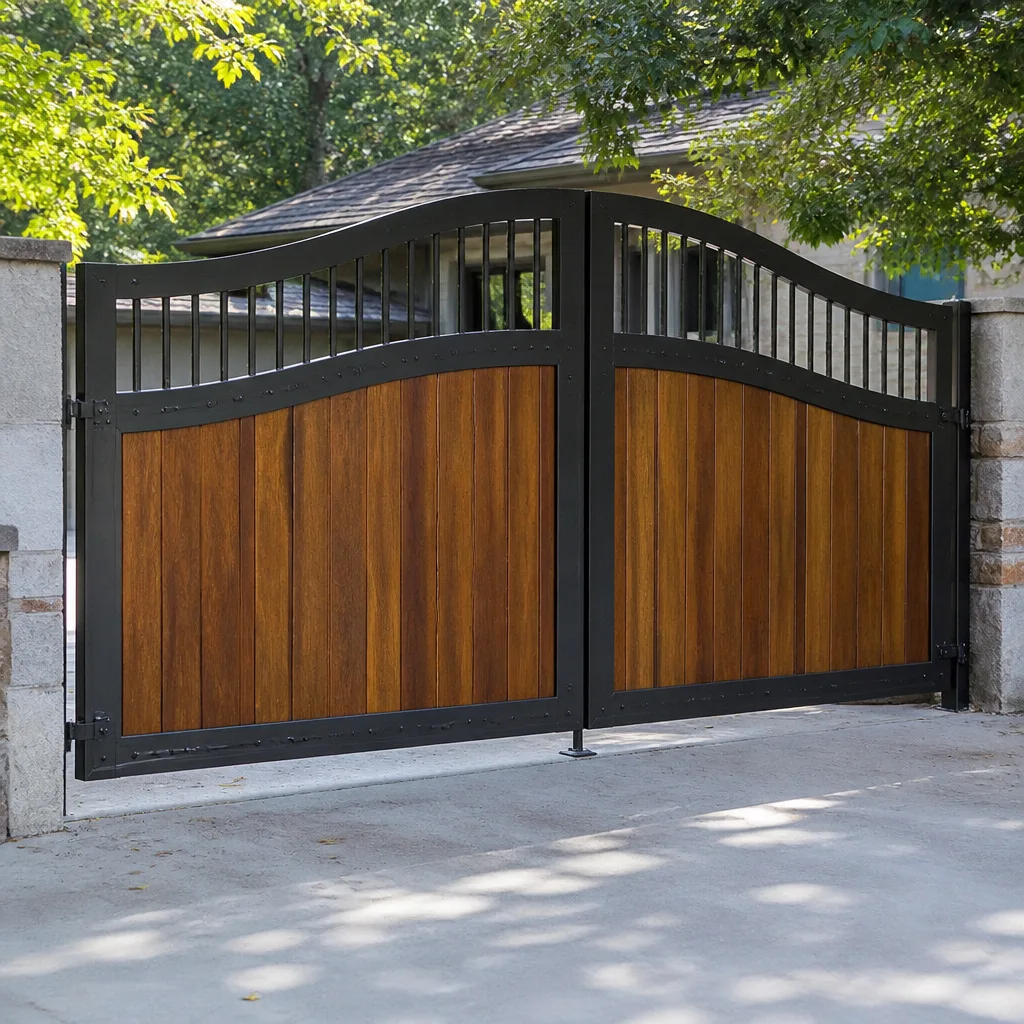 Wood & steel frame
 Farm & ranch
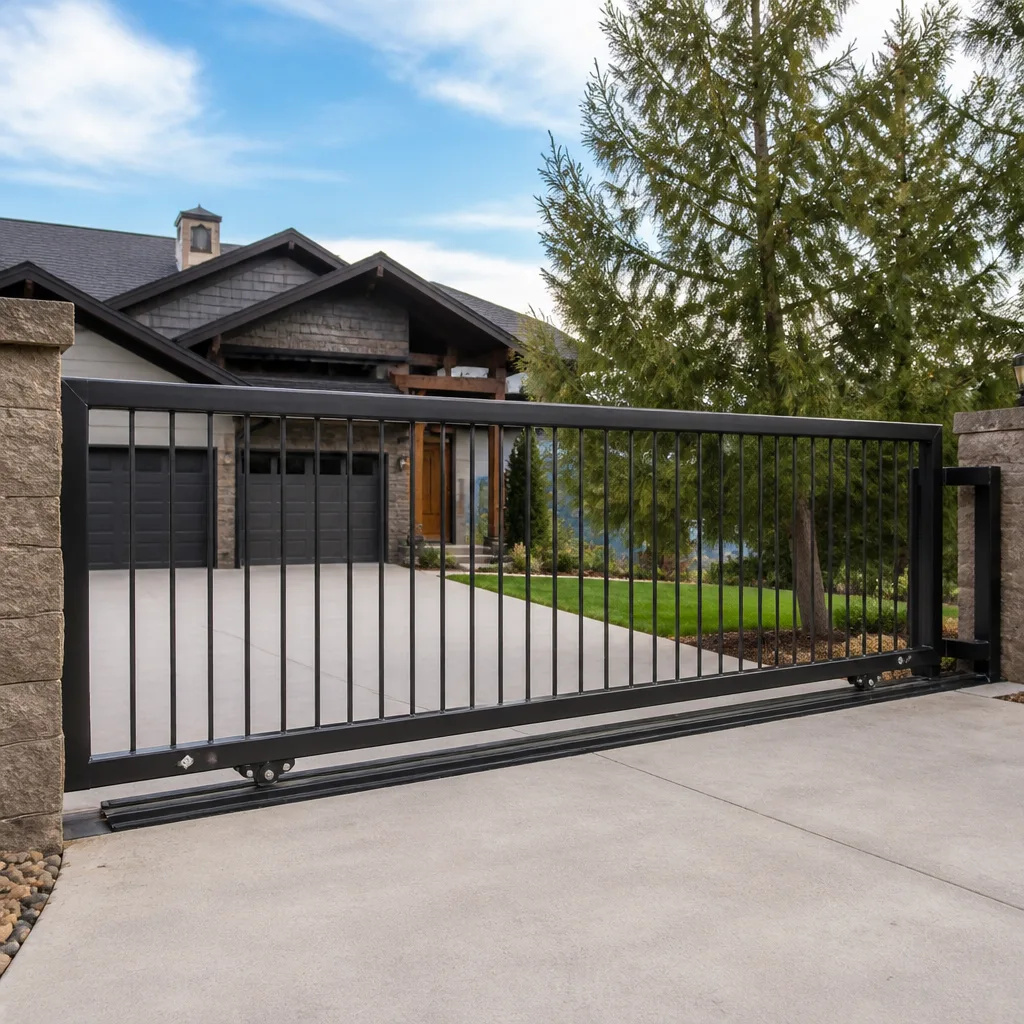 Sliding driveway gates
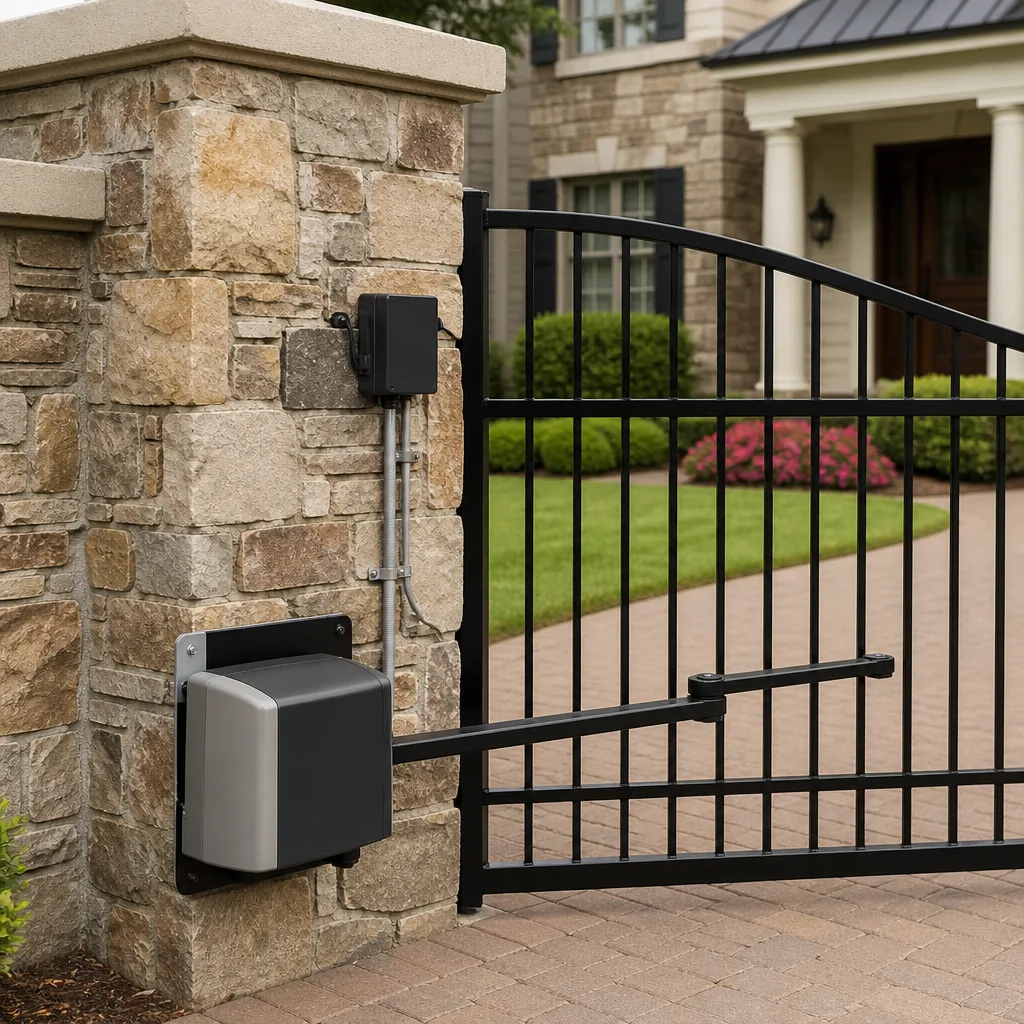 LiftMaster operators
Free on-site gate assessment - hinges, posts, and your LiftMaster or Nice gate operator checked before anything is quoted
The assessment is free and the quote is the invoice.
Get your free estimateGate Repair Emergency Preparedness Guide for Elgin Homes
Most gate failures don’t announce themselves. They happen at the worst possible moment: during an ice storm power outage, when an ambulance needs through, or when you’re fumbling for a key in the dark. Elgin homeowners tend to think of their gate as a convenience – a nice driveway feature. But an automatic gate is also an access control point, and when it fails, it can block the people who need to get in or leave open the property you wanted secured. This guide covers what actually matters: how to prepare before something breaks, what to do in the first five minutes of a failure, and when to call a technician. We work on gates across Elgin, and we’ve seen the same three oversights again and again.
Quick Answer
Gate emergency preparedness in Elgin comes down to three things: knowing and testing your manual release before you need it, confirming your battery backup can cycle the gate during an outage, and posting a simple access card so first responders can get through without damaging your gate. A gate that fails closed blocks access and a gate that fails open compromises security – each demands a different immediate response. Do those three preparations and most gate emergencies stop being emergencies.
Styles & brands we work with
- Wrought iron
- Wood & steel frame
- Farm & ranch
- Sliding driveway gates
- LiftMaster operators
Table of Contents
- How Do You Locate and Test the Manual Release on an Elgin Gate?
- How Much Battery Backup Does a Gate Operator Actually Need?
- How Do You Build an Emergency Access Protocol Card?
- What Do You Do When a Gate Fails in the Closed Position?
- What Do You Do When a Gate Fails in the Open Position?
- What Elgin Weather Does to Gate Systems
- What Happens When You Call for Help
- How Do You Keep a Gate From Failing in the First Place?
How Do You Locate and Test the Manual Release on an Elgin Gate?
Every automatic gate operator has a manual release – a way to disengage the motor so the gate can be moved by hand. The problem is that most homeowners have never used theirs. They don’t know where it is, whether it still works after years of sitting idle, or what tool it requires. In an emergency, that’s the difference between a gate that opens in thirty seconds and one that gets forced open by someone in a hurry.
Manual release designs vary by brand, and that matters when you’re preparing. On LiftMaster residential slide and swing operators, the release is usually a keyed lever or a chain hoist depending on the model. Mighty Mule and other entry-level operators often use a keyed release lever near the motor housing. FAAC and other professional-grade swing operators typically use a manual release key that disengages the gearbox. Commercial operators may use a hand-crank or chain release. The location is different on every one, which is exactly why you should sketch it out before you need it.
Here’s how to test and document yours:
- Locate the release. Check the operator housing, the gate post, and your owner’s manual. If you don’t have the manual, the brand name on the housing is your starting point.
- Find the key or tool. Most releases need a specific key. If it’s missing, that’s a problem to solve now, not during an outage.
- Test the release with the gate powered but the operator idle. Disengage the motor, push the gate by hand through a full cycle, then re-engage it. You’re checking that the mechanism isn’t seized.
- Photograph the release location and the procedure. Tape a photo inside the operator housing cover and keep a copy in your access card (more on that below).
- Re-engage and test the automatic cycle. Confirm the gate returns to normal operation after you’ve re-engaged the motor.
Do this once a season. A release that worked last spring can seize over a winter. If the release won’t move at all, that’s a repair item for a gate technician – not something to force.
How Much Battery Backup Does a Gate Operator Actually Need?
A gate battery backup that can’t cycle the gate through a real outage isn’t backup – it’s decoration. The question worth asking is simple: during a power failure, how many full open-and-close cycles can your gate complete before the battery dies?
For a residential gate in Elgin, you want a backup that can handle 20 to 30 cycles. That’s enough for the realistic scenarios: an extended storm outage, repeated access for family members coming and going, or a stretch where emergency services need through more than once. A backup that only manages a handful of cycles is undersized for anything beyond a brief blip.
Testing your backup is straightforward, and you can do it without a technician:
- Note the date and the current battery condition (most operators have an indicator or a control board status light).
- Cut power at the breaker – the one feeding the operator, not the whole house – so you’re running on battery only.
- Cycle the gate fully open and closed, counting each complete cycle.
- Stop when the gate slows, stalls, or the operator signals a low battery. Record the number of cycles you completed.
- Restore power and let the battery recharge before testing again.
If your count comes in well under 20, the battery is aging, undersized, or the wrong type for the operator. Battery capacity degrades over time, so a backup that was fine three winters ago may not carry you through the next one. It’s worth checking before winter sets in, since a power outage during an ice storm is exactly when you’ll want the gate working. If your operator doesn’t have a backup at all, that’s a conversation to have with a gate specialist who knows your brand.
How Do You Build an Emergency Access Protocol Card?
First responders in Illinois aren’t required to know the manual release procedure for your specific gate. When they arrive and the gate won’t open, their priority is access – and they’ll get it, one way or another. A posted instruction card is the cheapest insurance you can buy against a forced entry that damages your gate and costs you a repair.
The card does one job: tells someone who has never seen your gate how to open it by hand. Keep it short, laminate it, and post it where a responder will actually see it – on the gate post at driver eye level, near the keypad, or on the operator housing if it’s accessible from the driveway.
What the card should include:
- The gate brand and model (for example, LiftMaster, FAAC, or whatever is printed on your operator).
- A photo or simple diagram of the manual release location.
- The release procedure in three or four short steps.
- Whether a key or tool is needed, and where it’s kept.
- A backup contact number for whoever maintains the gate.
- The date the card was last verified, so you know when to update it.
Keep the card current. If you change operators, replace the battery setup, or have a technician service the release mechanism, update the card. A card with an out-of-date procedure is worse than no card, because it sends a responder down the wrong path. If your household has a medical need where ambulance access matters, it’s worth walking the release procedure with anyone who regularly uses the gate, so at least one person on site can open it without reading instructions.
What Do You Do When a Gate Fails in the Closed Position?
A gate stuck closed blocks access. That’s an inconvenience on a normal day and a genuine safety problem when someone inside needs to leave quickly or someone outside needs to get in. The immediate response is to get the gate open manually, then figure out why it failed.
Start with the manual release. If you’ve tested it before, this takes seconds. If the release won’t work, check the obvious causes first: a tripped breaker, a dead battery in the remote, an obstruction sensor that’s been triggered by debris, or a control board that’s lost power. Most “stuck closed” gates are one of those four things.
- Try the manual release and open the gate by hand.
- If the release works, prop the gate open safely and check the power source – breaker, battery, and any loop detector or safety sensor that might be holding the gate.
- If the release doesn’t work, don’t force it. Forcing a seized mechanism can bend the gate or damage the operator.
- Call a gate technician. A gate stuck closed is a priority access problem.
Once the gate is open manually, leave it open until a technician can look at it. A gate that’s been propped open should be secured so it doesn’t swing or slide unexpectedly, especially if children or pets are on the property. If the gate is your only vehicle access, plan for how you’ll get in and out until it’s repaired.
What Do You Do When a Gate Fails in the Open Position?
A gate stuck open is the opposite problem: access is fine, but the security and privacy you rely on are gone. This is the scenario that tends to get put off, because nothing is blocking anyone. Don’t put it off. An open gate overnight is a security gap, and the longer it stays open, the more likely it is to be left that way.
First, secure the property physically. Close the gate by hand if the manual release lets you – most open-failure scenarios still allow manual closing. If the gate can’t be closed, use a temporary physical barrier: a chain across the opening, a portable barricade, or vehicles parked to block the gap. Do what’s practical for your property; the goal is to make the opening obviously closed rather than obviously open.
Next, figure out why it failed open. Common causes include a safety sensor that’s been triggered and won’t let the gate close, a control board fault, a limit switch that’s out of adjustment, or a mechanical problem with the track or hinges. Some of these are quick fixes; others need a technician.
If the gate stays open overnight, secure it before dark and call for repair the next morning. For properties with a gate as the primary security barrier, don’t leave it open longer than necessary. A gate specialist can usually diagnose an open-failure the same day it’s reported. For a broken gate that needs gate repair, the sooner it’s diagnosed the sooner the property is secured again.
What Elgin Weather Does to Gate Systems
Elgin winters are hard on gate hardware. Ice storms and freeze-thaw cycles are the two conditions that cause the most gate failures in this area, and they hit in predictable ways.
Ice storms are the big one. Accumulated ice on a gate adds weight the operator wasn’t sized for, and it can freeze a slide gate to its track or a swing gate to its post. When the operator tries to move a gate that’s iced in place, the motor strains, the control board may fault, and the gate can fail in whichever position it was in when the ice hit. Freeze-thaw cycles do quieter damage: water gets into hinges, tracks, and the operator housing, freezes, expands, and works hardware loose over a season. A gate that ran smoothly in October can be stiff and misaligned by February.
Utility outages during ice storms are common in this part of Illinois, which is why battery backup matters so much here. When the power goes out during a storm, the gate is one of the first things to stop working – and the storm is exactly when you want it working. That’s the scenario your backup battery is for.
A few Elgin-specific habits worth building:
- Clear ice and snow from the gate track and hinges after a storm, before cycling the gate.
- Check the battery backup before winter, not after the first outage.
- Test the manual release in late fall, since a release that worked in summer can freeze.
- Keep the access card visible and readable through snow and ice – laminating helps.
If a gate is iced in place after a storm, don’t force it with the operator. Clear the ice by hand first, then cycle the gate. Forcing an iced gate is one of the most common causes of operator damage we see in Elgin after a winter storm. If a gate in Elgin has already been damaged by ice, a technician who knows your brand can diagnose whether it’s a mechanical issue, an operator issue, or both.
What Happens When You Call for Help
A gate emergency is a time-sensitive problem, and the response should match. When you call a dedicated gate technician, the first questions are usually about the brand and the symptom: which operator you have, whether the gate is stuck open or closed, and whether you’ve been able to move it manually. Those details let a technician arrive prepared rather than figuring it out on site.
Here’s how a typical emergency call goes:
- You describe the failure – the brand, the symptom, and what you’ve already tried.
- The technician diagnoses the likely cause before arriving, so they can plan the repair.
- On site, they confirm the fault and explain what’s involved.
- You get a free estimate in writing before any work starts.
- The repair is done, and the gate is tested through a full cycle before the technician leaves.
The key thing to know: you get a written estimate before work begins. No surprise invoice at the end, no work started without your agreement on the price. That’s how it should work, and it’s worth confirming when you call. We answer 24/7, and fast dispatch from 7am to 7pm means a gate failure reported in the morning is usually diagnosed and repaired the same day.
If you’re in Elgin and your gate has failed, whether it’s a stuck operator, a broken hinge, or a control board that won’t respond, the first call should be to a gate specialist who knows your brand. Call (833) 722-3856 for a free estimate.
How Do You Keep a Gate From Failing in the First Place?
Most gate emergencies are preventable with a handful of checks done a few times a year. The failures that catch homeowners off guard – a seized release, a dead backup battery, an iced-in gate – are the ones that were never tested or inspected.
A simple seasonal routine covers most of it:
- Test the manual release. Disengage, move the gate by hand through a full cycle, re-engage. Do this in spring and fall.
- Test the battery backup. Cut power, cycle the gate, count cycles, restore power. Do this before winter and again in spring.
- Inspect the hinges, rollers, and track. Look for looseness, rust, or debris that will strain the operator.
- Check the safety sensors. Clear debris and confirm the gate won’t close on an obstruction.
- Update the access card. Confirm the procedure still matches your equipment and that the card is readable.
- Clear ice and snow before cycling the gate after a storm.
If your operator is older or you’re not sure of its condition, a technician can assess it and tell you what’s worth replacing before it fails. For electric gate repair, a proactive check is usually cheaper than a repair after a failure. And if you’re comparing a repair against a new install, a Gate Repair Elgin specialist can advise on both.
One more habit: know your operator’s brand and model. When something goes wrong, that information is the first thing a technician will ask for, and it’s the difference between a quick diagnosis and a longer one. We work on LiftMaster, FAAC, BFT, Mighty Mule, and the rest of the major gate brands, so knowing yours puts you one step ahead when something fails.
Common Mistakes to Avoid
- Never testing the manual release until an emergency. A release that worked five years ago can seize from disuse or corrosion. Test it once a season so you know it works when it matters.
- Assuming the battery backup is fine because the gate works. The gate works on mains power; the backup only matters during an outage. Test it before winter, when outages are most likely in Elgin.
- Forcing an iced-in or jammed gate. Forcing a gate that won’t move is one of the fastest ways to damage the operator or bend the gate. Clear the obstruction or wait for a technician.
- No access card, or an out-of-date one. First responders won’t know your release procedure. A current, posted card prevents a forced entry that damages the gate.
- Leaving a gate open overnight after a failure. An open gate is a security gap. Secure it physically before dark and schedule the repair.
- Calling a general handyman for a gate problem. Gate operators, control boards, and safety sensors need a specialist who knows the brand. A generalist will often cost more in the end by misdiagnosing.
- Skipping a written estimate. Always confirm the price in writing before work starts. That’s how you avoid an invoice that doesn’t match what you were told.
See the difference
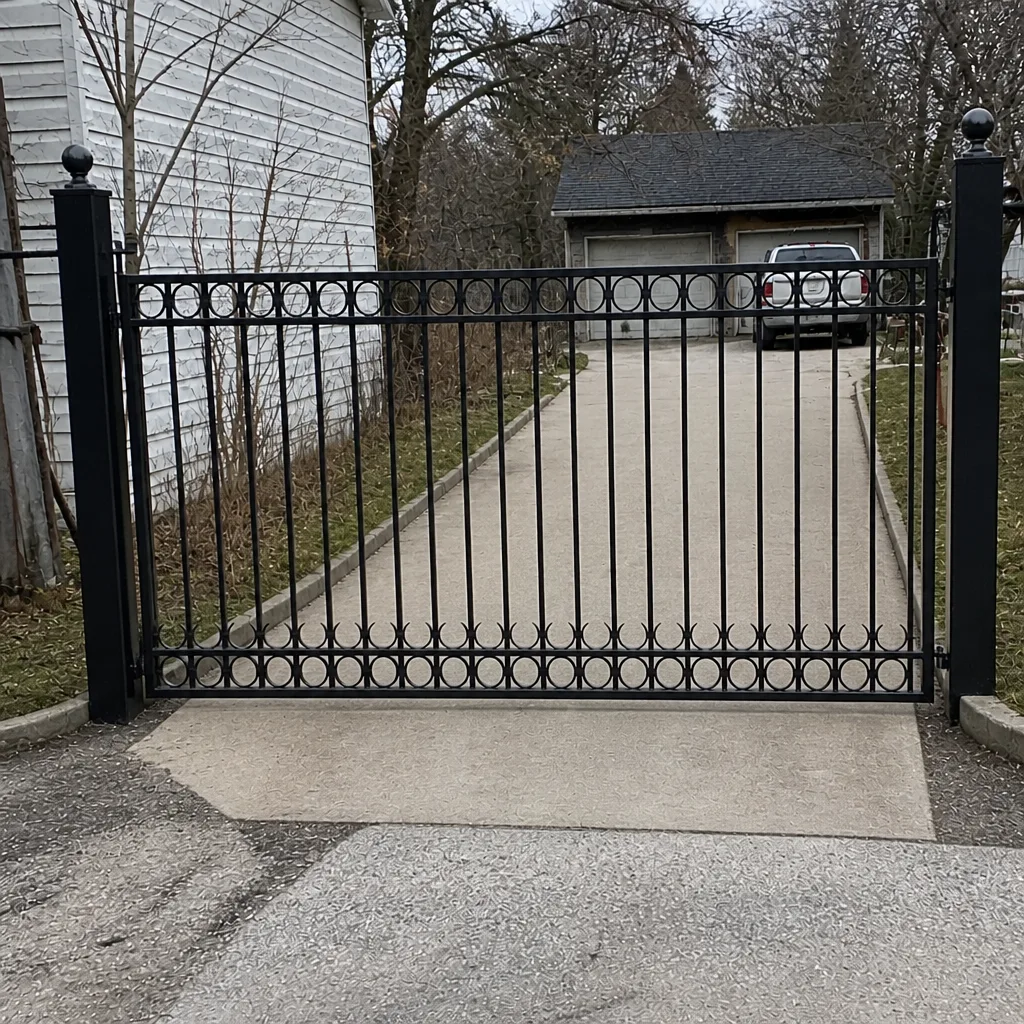
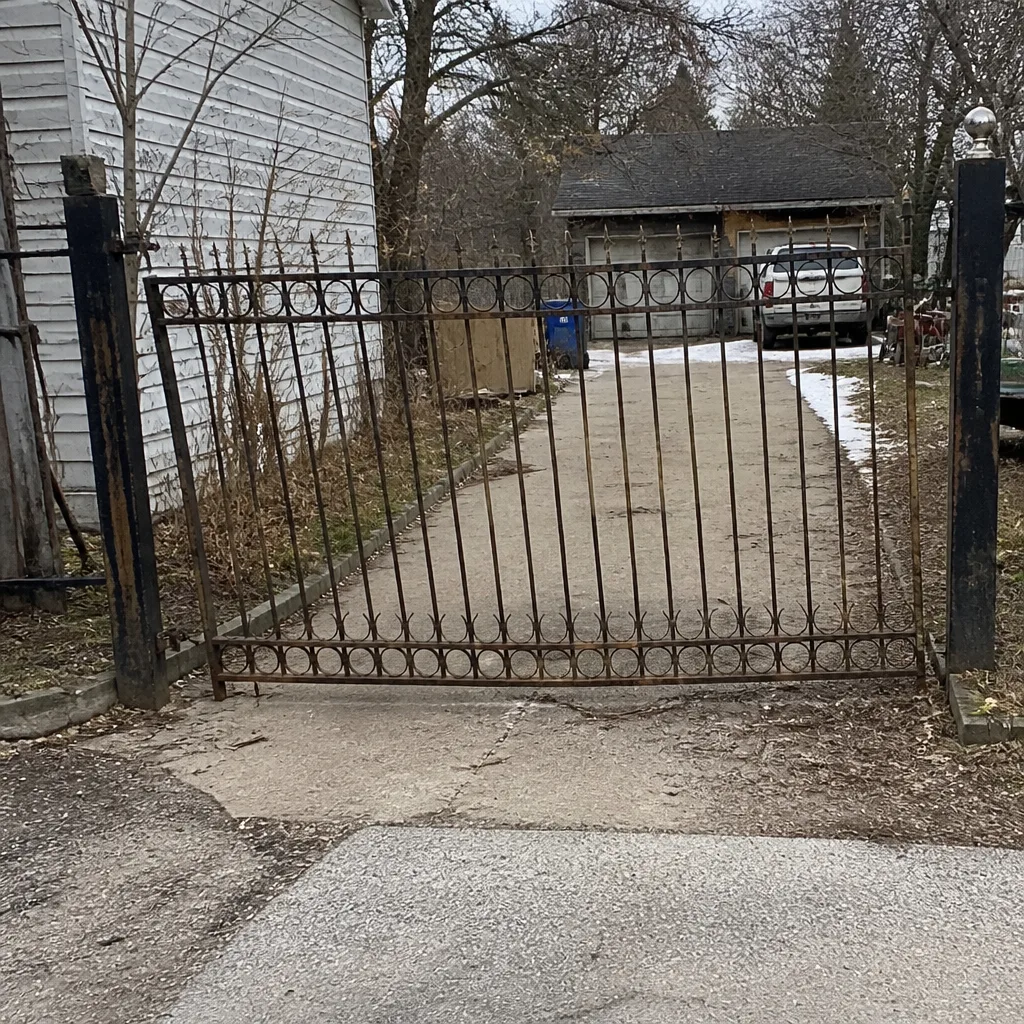 Before
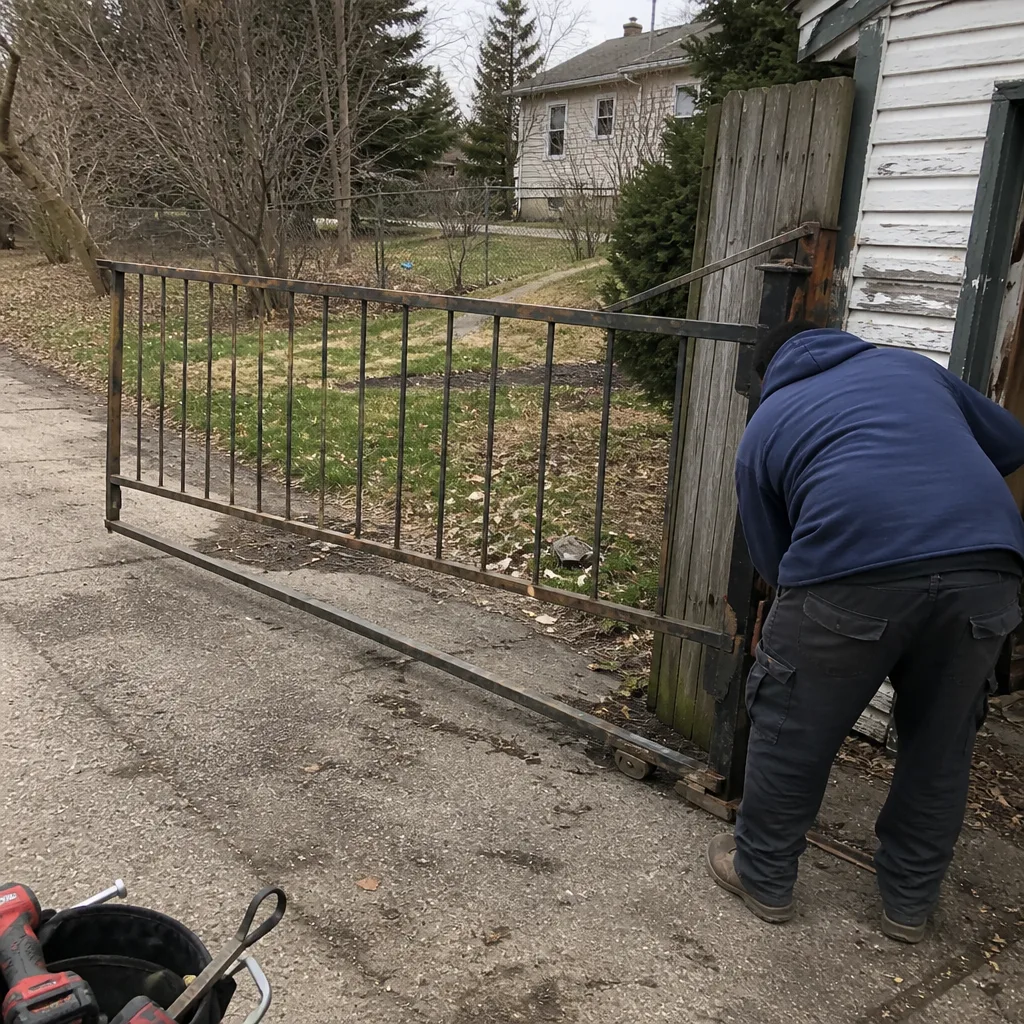
 After
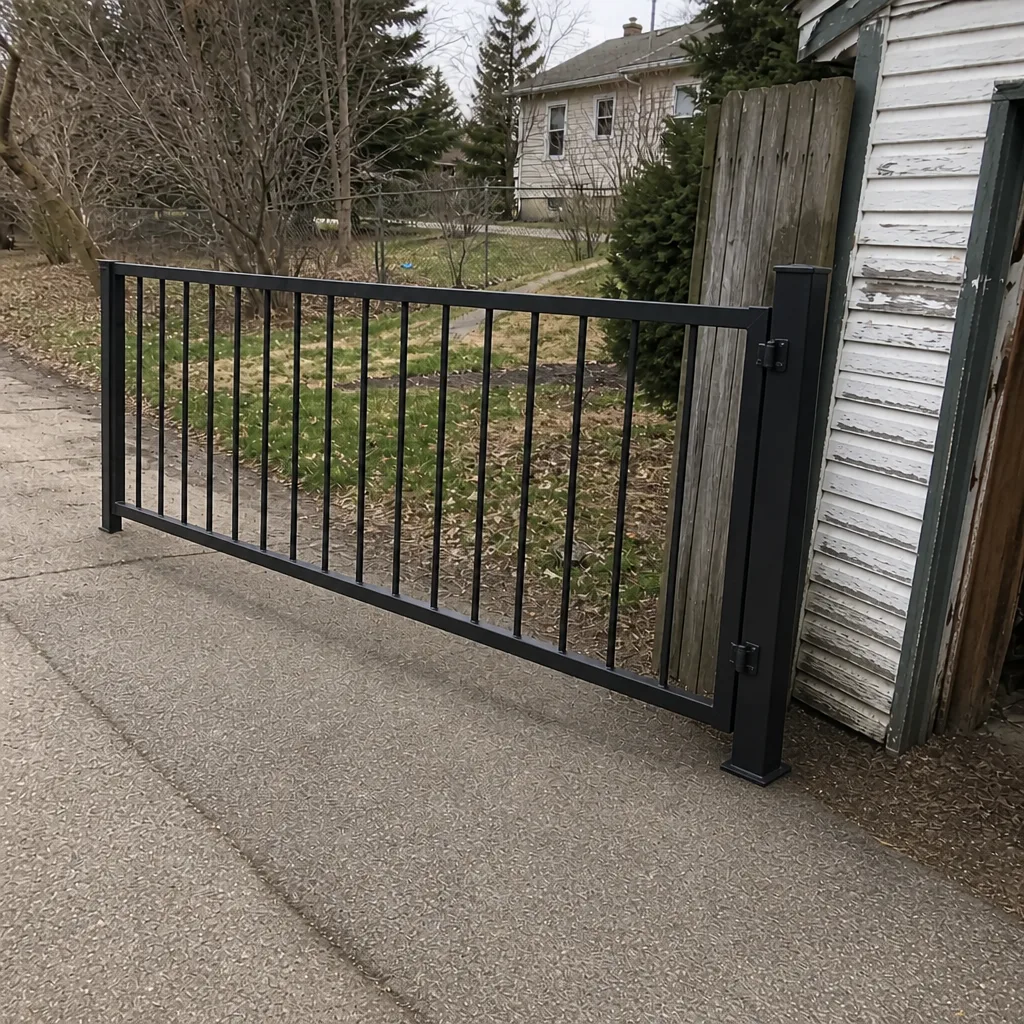
 Before
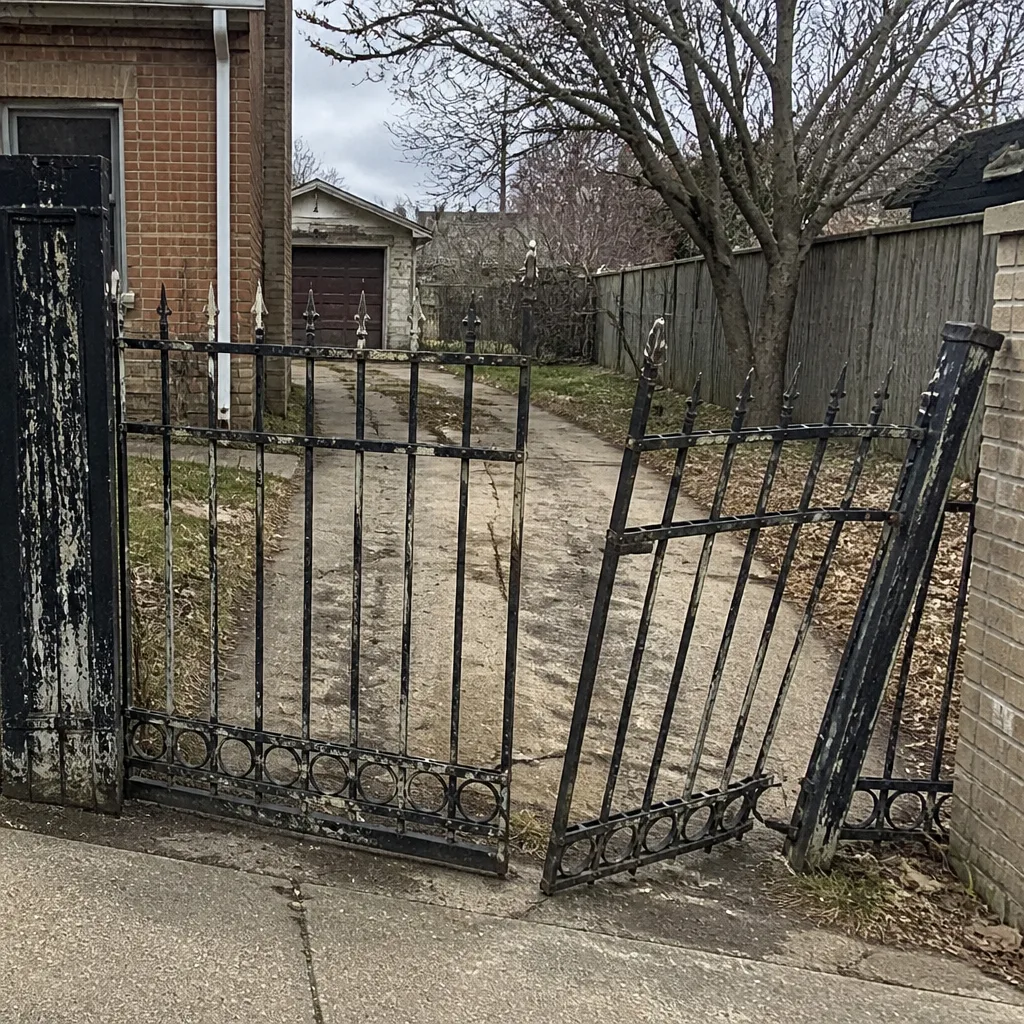
 After
 Before
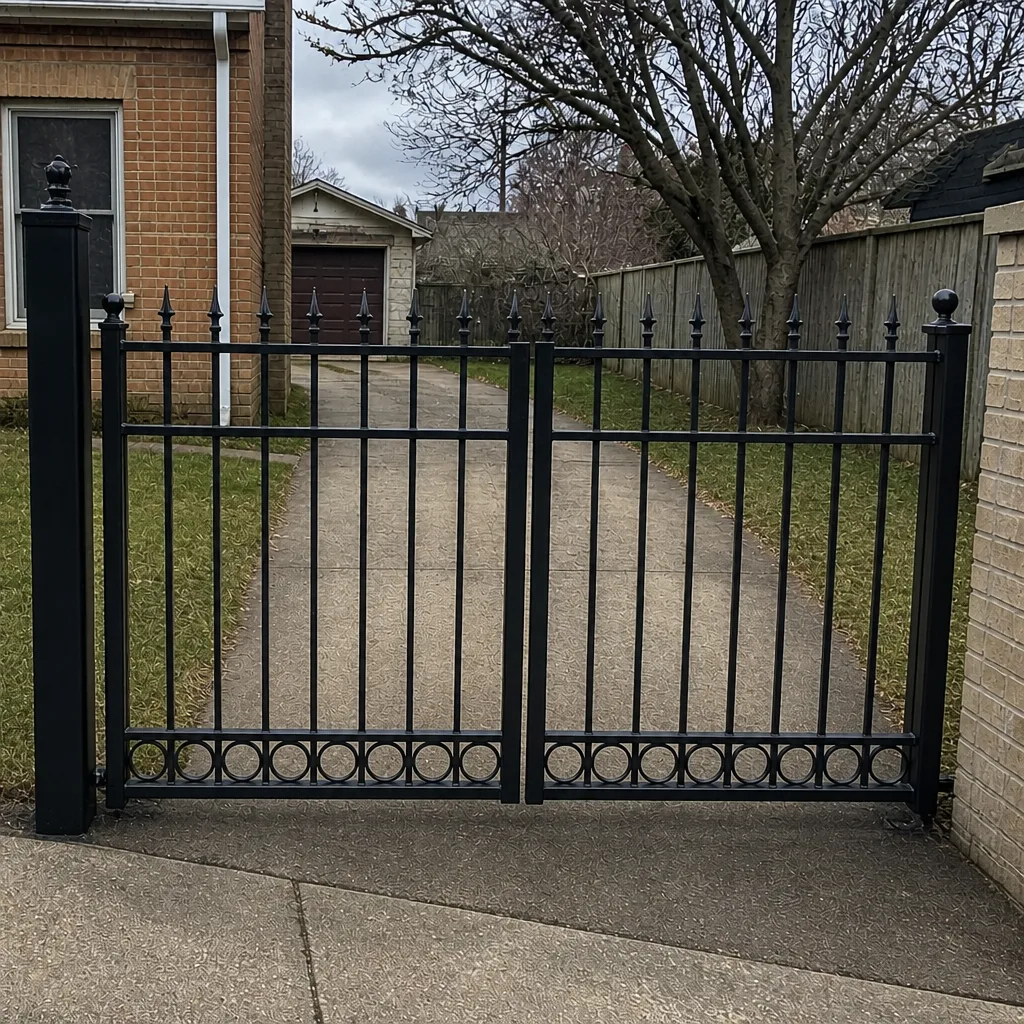 After
When to Call a Professional
Some gate problems are DIY territory: a dead remote battery, a reset breaker, debris on a sensor. But the situations below need a trained gate technician, and the sooner you call, the less damage and disruption.
Call a professional if the manual release won’t move, if the operator faults and won’t reset, if a gate is stuck open and you can’t secure it, if a control board or sensor is failing, or if a gate has been damaged by ice or impact. These are the cases where a specialist who knows your brand saves you time and money. A gate that fails in Elgin needs someone who can diagnose the brand and the failure, not someone learning on the job.
Gate Repair Elgin offers free estimates in Elgin – call (833) 722-3856 for a free estimate. We answer 24/7, and fast dispatch from 7am to 7pm, Sunday through Friday, means most gate failures are diagnosed and repaired the same day. The price is set per job by the written estimate, and you’ll know it before any work starts.
Frequently Asked Questions
Knowing and testing your manual release is the single most important preparation. It’s the one thing that lets you or a first responder open the gate when the operator won’t, and it costs nothing to test once a season. Call (833) 722-3856 for a free estimate if your release won’t move.
A residential backup should handle 20 to 30 full open-and-close cycles during an outage. Test yours by cutting power at the breaker and counting cycles until the operator slows or signals low battery. If it’s under 20, the battery or backup needs attention before winter. Call (833) 722-3856 for a free estimate.
No. First responders in Illinois aren’t required to know the manual release procedure for your specific gate, and in an access emergency they’ll force the gate if they can’t open it quickly. A posted access card with the release location, procedure, and any key or tool needed prevents that. Call (833) 722-3856 for a free estimate on a release repair or inspection.
Secure the opening physically before dark – close it by hand if the manual release allows, or use a chain or barricade if it doesn’t. Then schedule the repair. An open gate left overnight is a security gap, not just an inconvenience. Call (833) 722-3856 for a free estimate.
Often yes. A gate failure reported during dispatch hours is usually diagnosed and repaired the same day. We answer 24/7, and fast dispatch from 7am to 7pm, Sunday through Friday, means most repairs are handled without a second visit. Call (833) 722-3856 for a free estimate.
We work on the major residential and commercial gate brands, including LiftMaster, FAAC, BFT, Mighty Mule, and others. Knowing your brand and model before you call speeds up the diagnosis. Call (833) 722-3856 for a free estimate.
The Bottom Line
A gate emergency in Elgin is manageable if you’ve prepared for it. Test your manual release before you need it. Confirm your battery backup can carry the gate through an outage of 20 to 30 cycles. Post an access card so first responders can open your gate instead of forcing it. Know the difference between a gate that fails closed and one that fails open, and respond to each appropriately. Do those things and most gate failures stop being crises and become repair appointments. For Elgin homeowners, the preparation takes an hour or two a season. The repair, when something finally does go wrong, is a call to a gate specialist who knows your brand and gives you a written estimate before any work starts.
Call (833) 722-3856 for a free estimate. We answer 24/7. Fast dispatch from 7am to 7pm, Sunday through Friday.
Written by the team at Gate Repair Elgin.