
Last updated November 15, 2026
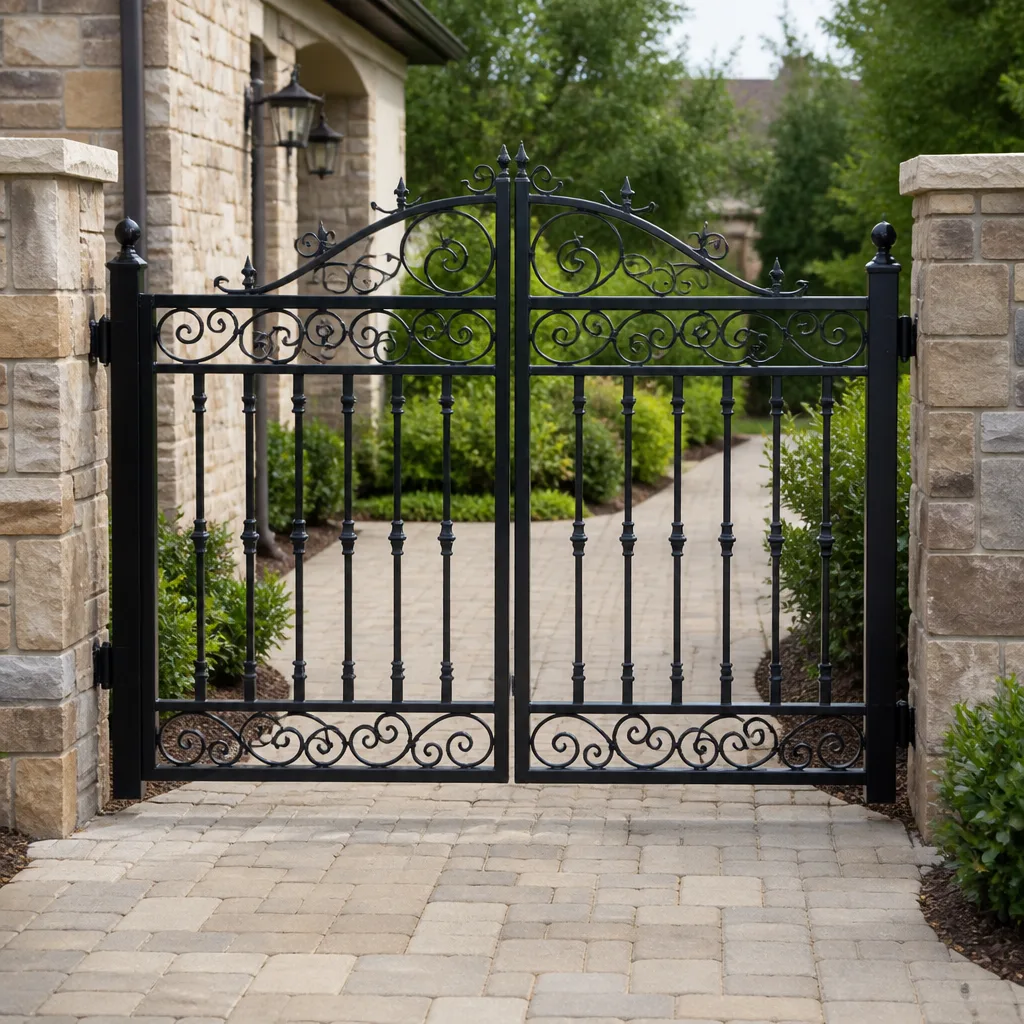 Wrought iron
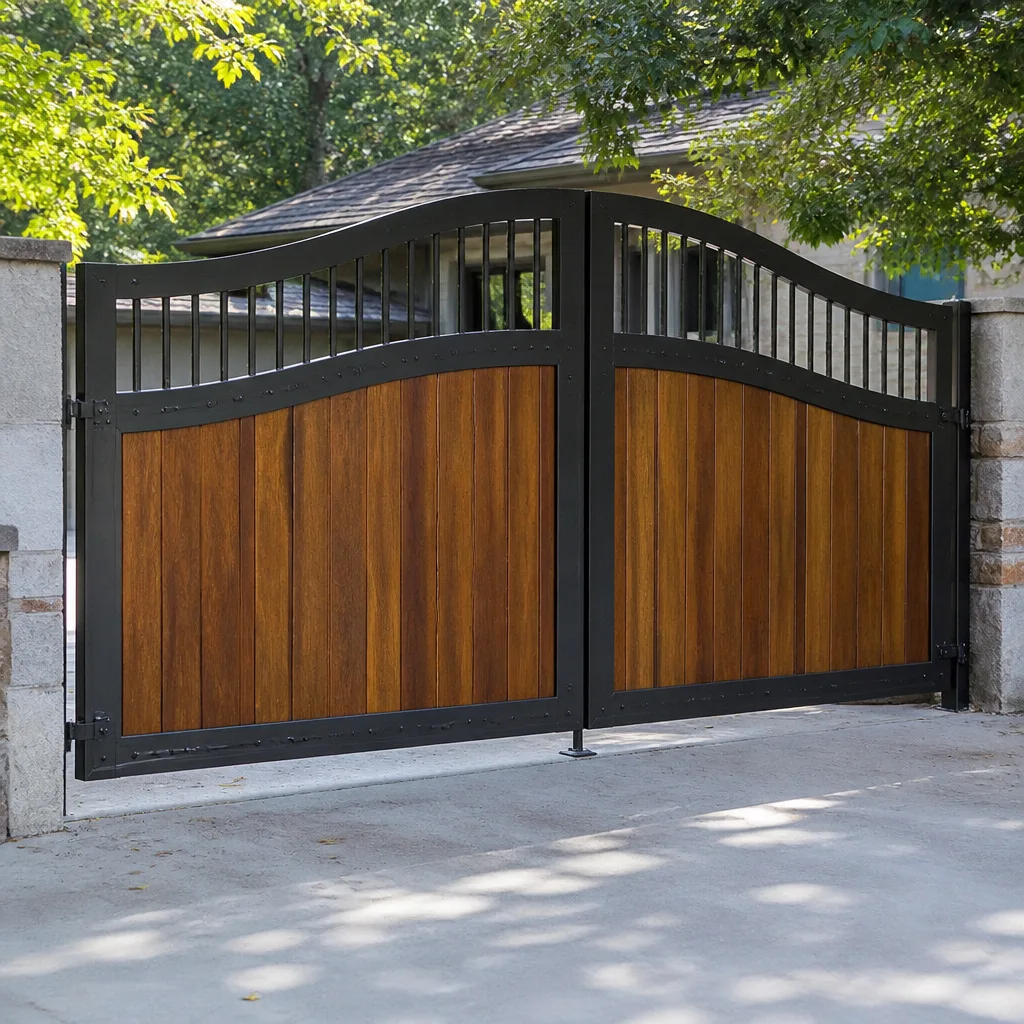 Wood & steel frame
 Farm & ranch
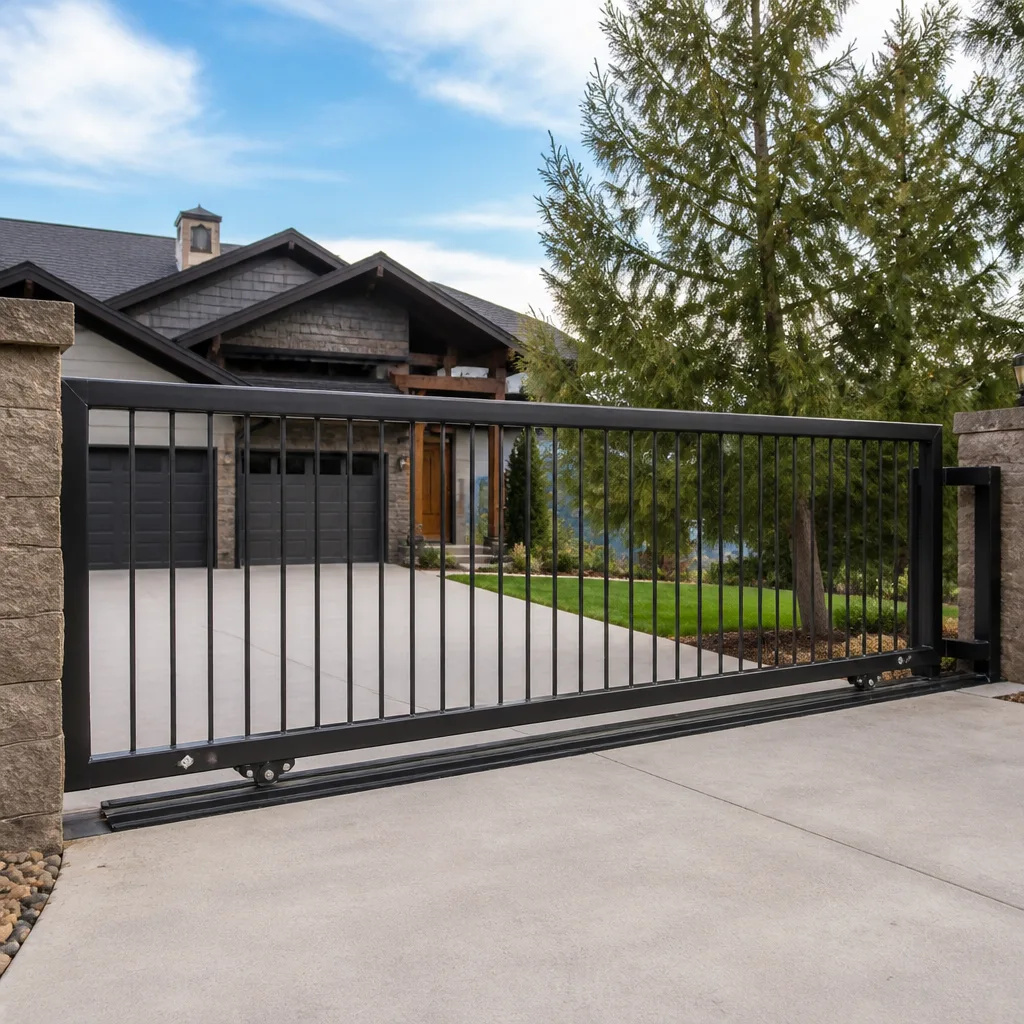 Sliding driveway gates
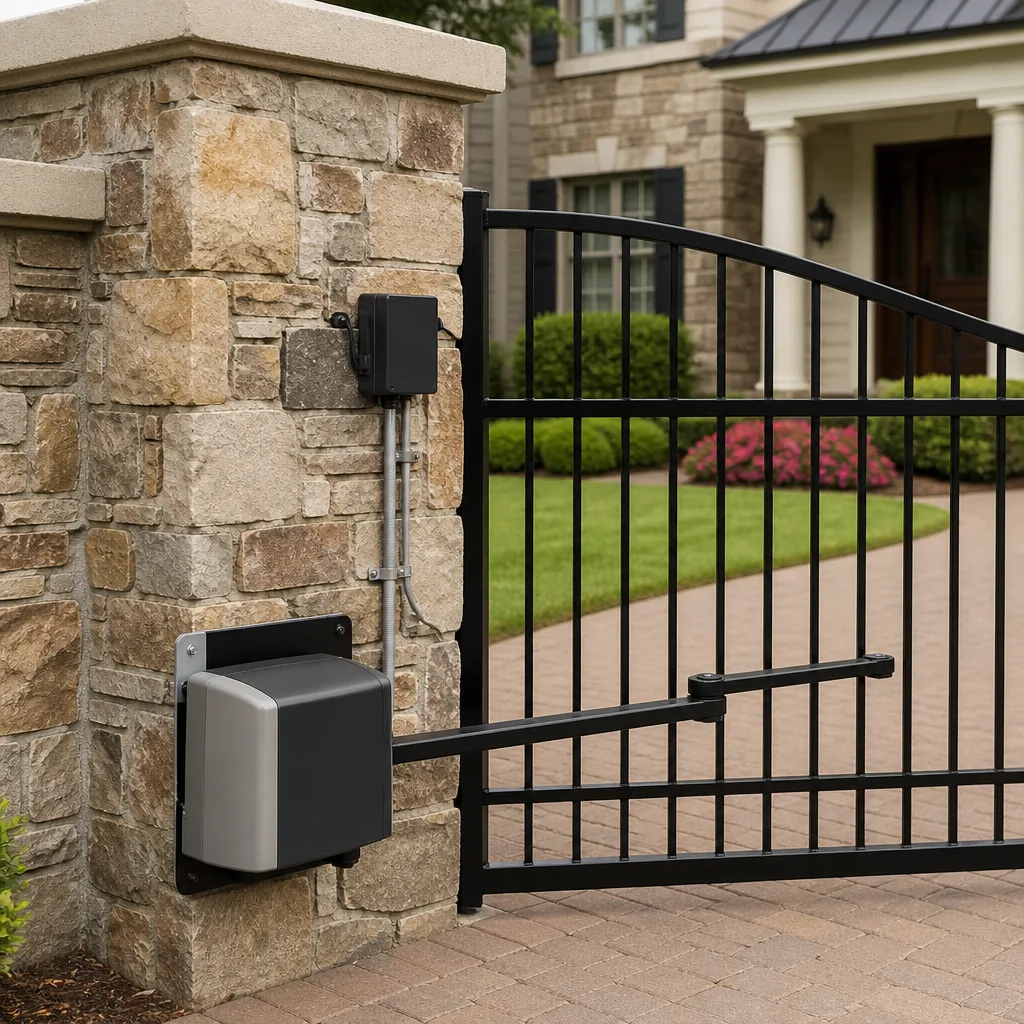 LiftMaster operators
Free on-site gate assessment - hinges, posts, and your LiftMaster or Nice gate operator checked before anything is quoted
The assessment is free and the quote is the invoice.
Get your free estimateDIY vs Professional Gate Repair: The Elgin Homeowner’s Decision Guide
Most gate repair advice treats the whole gate as one decision: fix it yourself or call someone. That framing is wrong, and it’s where homeowners get into trouble. A gate is a system of parts with wildly different risk profiles. Cleaning a photo-eye is a five-minute task with a rag and no downside. Touching the spring that lifts a 400-lb leaf is a different animal entirely, because that spring stores energy whether or not the gate is powered, and releasing it wrong can break bones. The same gate, two repairs, two completely different answers. This guide draws the DIY line at the component level, so you know exactly which jobs are yours and which belong to a trained technician. We’ll cover what’s genuinely safe, what Illinois code rules out, and how to diagnose a problem before anyone touches it. Gate Repair Elgin technicians work on gates every day and see both outcomes: the homeowner who fixed a sensor in ten minutes, and the one who made a wiring problem worse.
Styles & brands we work with
- Wrought iron
- Wood & steel frame
- Farm & ranch
- Sliding driveway gates
- LiftMaster operators
Quick Answer
Some gate repairs are safe for a homeowner to do: cleaning sensors, clearing obstructions, lubricating hinges and tracks, and resetting a tripped operator. Anything involving the control board, the operator’s power wiring, safety devices, or heavy panels and tracks that can crush or drop requires a trained technician. In Elgin, any work that connects to line voltage also requires a licensed electrical contractor by Illinois code, which removes the DIY option no matter how handy you are. The fastest way to decide is to identify the exact component that failed, not the symptom you’re seeing.
Table of Contents
- The Component-by-Component DIY Eligibility Matrix
- The Diagnostic Phase Is Always DIY-Eligible
- Illinois Code: Where DIY Stops
- The Real Cost of a Failed DIY Repair
- Interim Fix vs Permanent Solution
- Brand Matters: What Your Operator Tells You
- Safety Devices: Never Bypass, Never Guess
- Common Mistakes to Avoid
- When to Call a Professional
- Frequently Asked Questions
- The Bottom Line
The Component-by-Component DIY Eligibility Matrix
The single most useful thing you can do before deciding to DIY is name the component that’s actually failing. Not “the gate won’t open” but “the photo-eye is dirty” or “the control board has a fault light.” Once you’ve named it, the decision becomes mechanical.
Here’s how the parts break down by risk. Some of these you can handle in an afternoon. Some you should never touch, no matter how many videos you’ve watched.
- Photo-eyes and safety sensors (cleaning and alignment): DIY-safe. Wipe the lens, check for spider webs, make sure the two units face each other. This is the single most common “broken gate” call, and it’s usually a two-minute fix.
- Hinges, rollers, and tracks (lubrication and debris clearing): DIY-safe. A dry hinge squeaks, a leaf of leaves jams a track. Clean it, oil the moving parts, done.
- Remote controls and keypads (battery replacement and re-pairing): DIY-safe. Swapping a battery or re-pairing a remote to the operator is a documented procedure in every manual.
- Operator reset and error-code lookup: DIY-safe. Cycling power and reading the code is diagnostic, not repair.
- Control boards and operator wiring: professional only. Control boards carry line voltage and low-voltage logic on the same panel. A mistake here can destroy the board, and the board is the most expensive part of the operator.
- Safety edges and loop detectors: professional only. These are the devices that stop a gate from crushing a person or a car. Miswired, they fail silently, which is worse than failing loudly.
- Heavy slide-gate panels and tracks that have come off alignment: professional only. A sliding leaf that’s jumped its track can weigh hundreds of pounds. Getting it back on safely takes two people and the right lifting gear.
- Anything connected to line voltage: licensed electrical contractor by Illinois code. More on this below.
Notice what’s not on the DIY-safe list: springs. A gate’s spring system, and on swing gates the torsion assembly that balances the leaf, holds tension continuously. That stored energy is what makes a heavy gate easy to lift by hand, and it’s also what makes spring work genuinely dangerous. If your gate sags, drops, or feels suddenly heavy, that’s spring territory. Call a technician.
One more note on your specific equipment: if your operator is a Mighty Mule or a LiftMaster, the manuals are good and the parts are common, so a homeowner can often do the small stuff. If it’s a FAAC or a commercial DoorKing, the electronics are more tightly integrated and the DIY-safe surface shrinks. That’s not a knock on the brand. It’s just how the systems are built.
The Diagnostic Phase Is Always DIY-Eligible
Here’s the part most DIY guides skip: you can do all the diagnosis yourself, and you should. The more you know about what’s failing before a technician arrives, the faster the repair goes and the more accurate the estimate. Diagnosis doesn’t involve touching dangerous parts. It involves looking, listening, and reading.
Follow this sequence before you call anyone:
- Read the operator’s error code. Every modern operator displays a code when a fault occurs. Write it down. That one number tells a technician more than a ten-minute phone description of the symptoms.
- Check the obvious obstructions. Look for debris, a fallen branch, a leaf sitting in the track, or a car parked too close to the sensor. A surprising share of “my gate is dead” calls end with a stick in the track.
- Test the remote and the keypad separately. If the remote works but the keypad doesn’t, the problem is in the keypad wiring, not the operator. If neither works, the problem is upstream.
- Inspect the safety sensors. Are the lenses clean? Do the units line up? Most safety sensors have a light that’s solid when aligned and blinking when not. A blinking light means the sensor isn’t seeing its partner, and the gate won’t close for safety.
- Listen for the operator. Does the motor hum without moving the gate? That usually points to a mechanical issue, not electrical. Does it click and stop? That’s often a control board or limit switch.
- Cycle the power once. Turn the operator off, wait a minute, turn it back on. This clears some transient faults. If the gate works after a reset, note it, because the problem will likely return.
Write down everything you observe: the error code, what you heard, what you tested. When you call for electric gate repair, that information tells us whether we’re looking at a sensor problem, a control board, a mechanical failure, or a power issue before we arrive. It also means you can ask smarter questions when you get the estimate.
Diagnosis is where the homeowner has the most upside and the least risk. Do this part yourself. Then decide about the repair.
Illinois Code: Where DIY Stops
This is the section most guides leave out, and it’s arguably the most important for anyone living in Elgin. Illinois is not a state where a confident homeowner can legally do their own electrical work on a gate operator, even if they technically know how. Electrical work on a gate operator’s power supply is work that requires a licensed electrical contractor. That’s not a hidden fee or a company preference. It’s the law, and it removes the DIY option for a whole class of gate repairs.
Here’s what that means in practice:
- Connecting an operator to the power supply: licensed electrical contractor. If your operator needs a new power connection, a new circuit, or a replacement for a damaged power feed, that’s not a job for a homeowner in Elgin.
- Running any new wiring to a gate: licensed electrical contractor. Whether it’s a control wire, a loop detector lead, or a safety edge run, the connection and code compliance belong to a licensed trade.
- Low-voltage safety device wiring: a gray area professionally, which is why we treat it as professional work. The devices themselves are low-voltage, but they connect to an operator that isn’t, and getting the interface wrong makes the safety feature useless.
- Mechanical work on tracks, rollers, and hinges: no electrical permit needed. This is the part where DIY stays viable, as long as you’re not dealing with a heavy panel that could drop.
If you’re in Elgin and wondering whether a repair crosses the electrical line, the answer is usually “yes” once you’re inside the operator enclosure. The safe assumption is that the inside of the operator is professional territory. Ask the city’s building department if a permit is needed. When the work involves the power run, the answer is a licensed electrical contractor.
This is also where a technician with gate-specific experience pays off. A general handyman isn’t a licensed electrician, and a garage-door company that handles gates as a side job isn’t going to know the code requirements on an operator power feed. A dedicated gate specialist does, or works with a licensed electrician who does. If you need gate repair on an operator with any wiring involved, get it done right the first time.
The Real Cost of a Failed DIY Repair
Homeowners usually weigh DIY against professional repair by comparing parts to labor. That comparison misses the costs that show up after a DIY attempt goes sideways. We’ve diagnosed enough of these to know the pattern, and it’s rarely pretty.
The costs that don’t show up on the parts receipt:
- Secondary damage to adjacent components. A misaligned gate that the motor keeps trying to push wears out the motor. The original repair was a $60 track adjustment. The new repair involves a motor. Same gate, much bigger bill.
- Manufacturer warranty voidance. Most operator warranties are void if the unit was serviced by an uncertified party or the wiring was altered outside manufacturer spec. On a Mighty Mule or an Elite operator still under warranty, this alone can justify the professional call.
- Expedited service calls. When a DIY repair fails, the gate usually fails at the worst moment: mid-drive, in the rain, with a car trapped on the wrong side. That turns a routine repair into a same-day call.
- Repeated labor. A repair that fails once is usually followed by a second attempt with a different theory. By the third trip to the parts store, the DIY path has cost more than the original professional estimate would have.
- Safety device failure. If you bypass or miswire a safety edge to “get the gate working,” you’ve created a gate that can crush. That’s not a cost you can recover from.
The pattern is clear. DIY works when the repair is contained to a single, low-risk component. DIY goes wrong when the repair touches the operator, the wiring, or a safety component, because the failure cascades.
If you want a straight answer on whether your specific repair is DIY-safe, call (833) 722-3856 for a free estimate. We answer 24/7. Fast dispatch from 7am to 7pm, Sunday through Friday. The estimate is free, and the price is set per job by the written estimate before any work starts.
Interim Fix vs Permanent Solution
Sometimes the right answer is a middle path. You can’t get a technician out for a day or two, but the gate is stuck open, stuck closed, or moving in a way that’s clearly going to fail. What you want is a safe interim fix: something that keeps the gate from failing catastrophically without making the underlying problem worse.
The safest interim move is to immobilize the gate, not to force it.
- Cut power to the operator. Find the operator’s disconnect switch or the breaker that feeds it. Turn it off. Leave a note on the panel so nobody flips it back on while the gate is in a known state.
- Disengage the manual release. Every operator has a manual release that lets you move the gate by hand. Use it. Once engaged, the motor isn’t fighting the gate.
- Secure the gate leaf. If the gate is stuck open and the property needs to stay secure, use a physical lock or a temporary brace to hold the leaf in place. Don’t wire the operator to keep it closed.
- Do not force a stuck gate. If a gate won’t move even with the manual release engaged, something mechanical has failed. Forcing it bends the track or the hinge, and turns a repair into a replacement.
- Never bypass a safety device to get the gate working “for now.” The safety edge exists to stop the gate from closing on someone. A bypassed edge is a trapdoor. Wait for the repair.
If you’re not sure how to disengage the manual release on your operator, don’t guess. The procedure is different for a LiftMaster than it is for a DoorKing, and forcing it the wrong way strips the gear. Call us and we’ll walk you through the safe sequence for your specific unit.
The interim fix is about reducing risk, not solving the problem. The permanent solution always involves a diagnostic and a repair. Treat the interim as a holding pattern, not a workaround. A gate that’s been immobilized still needs a technician to diagnose why it failed in the first place, and delay often widens the damage.
Brand Matters: What Your Operator Tells You
The brand on your operator isn’t trivia. It tells you something about the repair you’re looking at, because different brands are built for different purposes. A Mighty Mule residential operator and a FAAC commercial operator share a basic function, but they don’t share a repair profile, and the DIY-safe surface is smaller on the more integrated systems.
Here’s how the brands we work on the most break down:
- Mighty Mule and Ghost Controls: residential-grade operators with widely available parts and documented repair procedures. Homeowners can do more of the small work on these. Error codes are usually clear and the manuals are solid.
- LiftMaster and Elite: residential and light commercial operators with good documentation. Some electronics work is within reach, but the wiring side is still professional territory.
- FAAC and DoorKing: commercial-grade operators, often controlling heavier gates with more complex safety systems. Control board work, loop detectors, and access-control integration all belong to a technician.
- Linear and Viking: mid-range operators used for both residential and light commercial. The repair profile depends heavily on the specific model.
- BFT: commercial operators with well-regarded reliability. When something fails, the diagnosis is usually a control board issue or a limit switch, and the repair is professional.
The point is not that one brand is easier than another. The point is that the brand on your operator is the starting point for a repair decision, not a detail to skip. A technician who works on your brand every week knows the common failure modes for your specific model. A generalist who sees one gate a month doesn’t. That’s the difference between a repair that holds and a repair that fails two weeks later.
If you’re not sure what brand you have, look at the operator housing. Every one carries a manufacturer label with a model number. Note the model number when you call, and we can tell you what to expect before we arrive.
Safety Devices: Never Bypass, Never Guess
The safety edge and the photo-eye are the two components on your gate that exist to protect people. If your gate is a slide gate, the safety edge is the device that detects an obstruction and reverses the gate. If your gate is a swing gate, the safety edge and the photo-eye work together to prevent the gate from closing on a person or a car.
These devices have a specific property that makes them different from every other part on the gate: they fail quietly. A roller that fails makes noise. A hinge that fails squeaks. A safety edge that fails gives you no warning at all until someone gets hurt.
That’s why the DIY line on safety devices is different from the DIY line elsewhere on the gate. The general rule on the gate is “you can do it if you know exactly what you’re doing.” On the safety devices, the rule is “don’t touch the wiring, don’t bypass the device, and if you think it’s failing, call a professional.”
If a safety device is failing, the interim fix isn’t to disconnect it. The interim fix is to immobilize the gate until someone can look at it. A gate that won’t close is inconvenient. A gate that closes on someone because the safety edge was bypassed is a much worse problem.
This is one area where we’d rather err on the side of a call. If you’re in Elgin and your safety devices aren’t working, get us out to look at them. We’ll diagnose the issue, tell you what’s involved, and set the price in writing before any work starts.
Common Mistakes to Avoid
- Treating the whole gate as one DIY decision. A gate is a system. Cleaning a sensor is DIY-safe; wiring the control board is not. Judge each repair by the component, not the gate as a whole.
- Bypassing a safety device to “get it working.” Bypassed safety edges are the single most dangerous thing a homeowner can do to a gate. If the gate won’t close because a sensor is failing, immobilize the gate and call.
- Forcing a stuck gate past the manual release. If the release is engaged and the gate still won’t move, something mechanical has failed. Pushing harder bends the track and turns a repair into a replacement.
- Ignoring the error code. Every operator displays a code. Write it down. That one number tells a technician more than any phone description, and it’s free information.
- Doing electrical work without a license. In Illinois, the power connection on a gate operator is licensed electrical work. A DIY power run is not just risky, it’s illegal, and it may void the operator’s warranty.
- Assuming a garage-door company handles gates. A garage-door company that services gates as a side job doesn’t see gate-specific failure modes daily. A dedicated gate specialist does.
- Skipping the diagnostic phase. Homeowners who do the diagnosis themselves get faster repairs and more accurate estimates. Homeowners who skip it spend more time on the phone and get less precise estimates.
When to Call a Professional
Call a professional when the repair involves the operator’s power supply, the control board, the safety devices, a heavy panel that could drop, or a gate that won’t move even with the manual release engaged. Call when the gate is a commercial or access-control system, when the brand is one you don’t recognize, or when the error code points to a fault the manual doesn’t cover. Call when the gate is stuck and the property needs to stay secure. And call when you’ve done the diagnostic yourself and you know exactly what’s wrong, but the repair crosses the DIY line. That isn’t a defeat. It’s the decision guide working exactly as intended.
Gate Repair Elgin offers free estimates in Elgin. Call (833) 722-3856. We answer 24/7. Fast dispatch from 7am to 7pm, Sunday through Friday. We’re closed Saturday, so a call on Saturday is booked into the next opening, Sunday through Friday, 7am to 7pm. Our technicians have up to 9 years of experience, and we work on the brand you actually have.
Frequently Asked Questions
Sometimes, but only for specific components. Cleaning photo-eyes, clearing obstructions, lubricating hinges and tracks, replacing a remote battery, and re-pairing a remote are safe DIY repairs. Anything involving the control board, the operator’s power wiring, safety devices, or a heavy panel that could drop requires a trained technician, and in Illinois the power connection requires a licensed electrical contractor by code.
No. In Illinois, connecting a gate operator to the power supply, or running new wiring to a gate, is licensed electrical work. That rule removes the DIY option on any repair that touches the electrical side of the operator, regardless of how experienced you are. If you’re in Elgin and you’re not sure, ask the city’s building department, and plan on a licensed electrical contractor for the power connection.
Usually the gate stops closing or reverses for no visible reason. The safety edge is a device that detects obstructions and reverses the gate, and when it fails, it fails without warning. If you notice the gate reversing on its own, refusing to close, or closing partway and stopping, a safety device is a likely cause. Don’t bypass it. Immobilize the gate and call us for a diagnostic.
The price is set per job by a written estimate, so the exact cost depends on the component and the brand. The estimate itself is free. Call (833) 722-3856 and we’ll diagnose the problem, talk you through what’s involved, and set the price in writing before any work starts. You’ll know what you’re paying before we begin.
Often, yes. Most manufacturer warranties on operators like Mighty Mule, LiftMaster, or Elite are void if the unit was serviced by an uncertified party or the wiring was altered outside manufacturer spec. Before you start any repair on a warrantied operator, check the warranty terms. If the operator is still under warranty, a professional repair is usually the lower-cost choice.
We answer 24/7, and we offer same-day service where possible. Fast dispatch from 7am to 7pm, Sunday through Friday. Call (833) 722-3856 and we’ll book you into the next available opening. We’re closed Saturday, so a Saturday call gets booked into the next opening, Sunday through Friday, 7am to 7pm. For a new gate installation or a full operator replacement, the work is measured and scheduled, and we’ll set a written price before any work starts.
The Bottom Line
The DIY vs professional gate repair question isn’t about your skill level. It’s about which component is on the table. Cleaning a photo-eye, oiling a hinge, and resetting an operator are yours. The control board, the power wiring, the safety devices, and the heavy panels are professional work, and in Elgin, the electrical side is licensed work by law. Do the diagnostic phase yourself. Name the component. Then decide. If the repair crosses the DIY line, that’s not a failure. That’s the decision guide doing its job. When you’re ready for an expert to look at it, call (833) 722-3856 for a free estimate. We’re gate specialists in Elgin, we work on your brand, and we’ll get your gate back on track today.
For the full picture of what we handle, start with Gate Repair Elgin and browse our Elgin service area. If you’ve done the diagnostic and need a price, call (833) 722-3856. We answer 24/7. Fast dispatch from 7am to 7pm, Sunday through Friday.
Written by the team at Gate Repair Elgin.
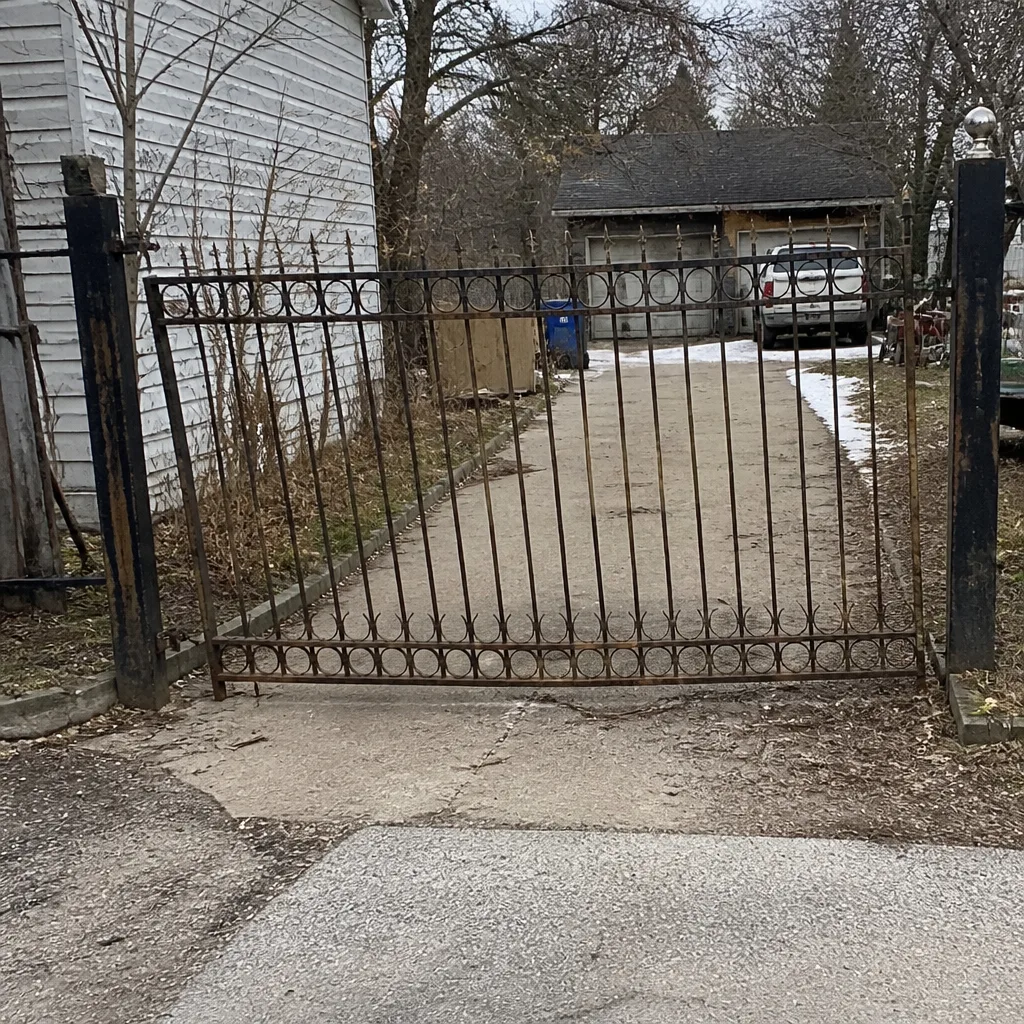
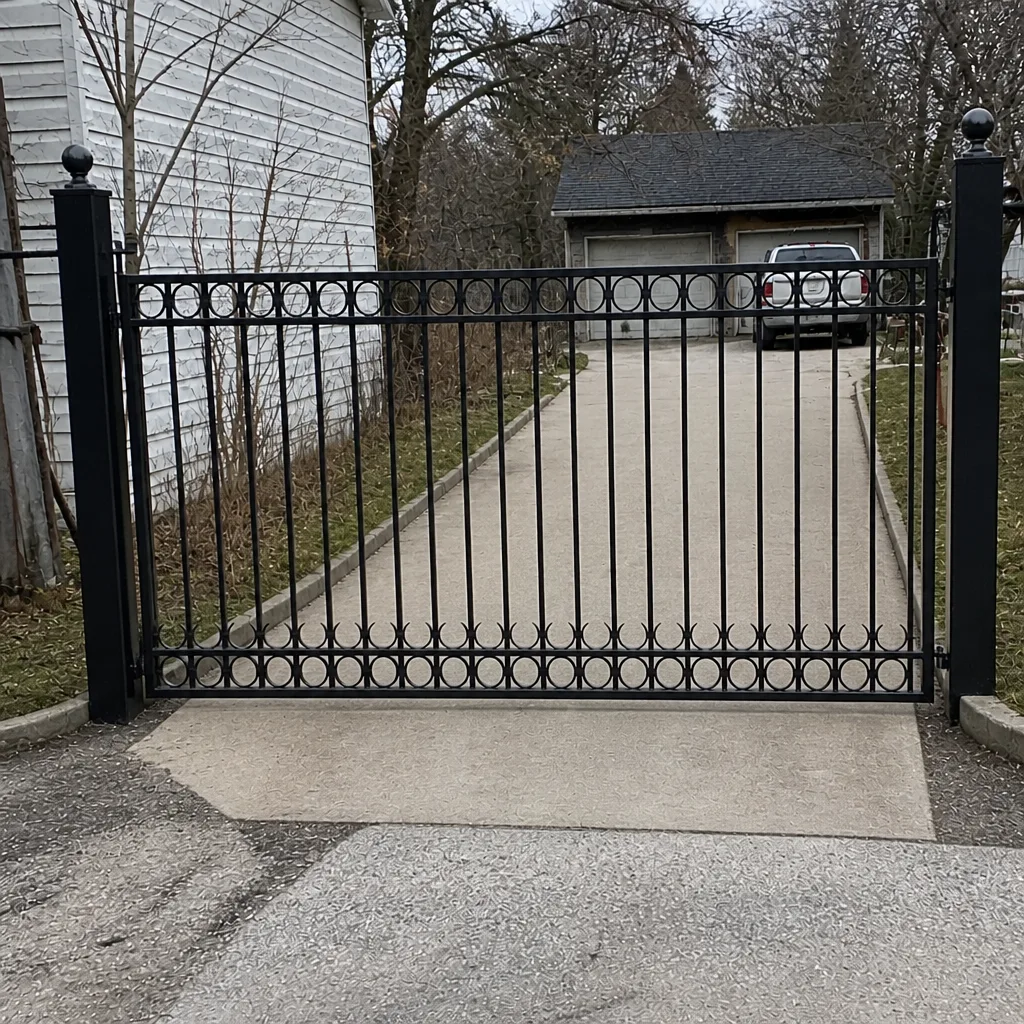
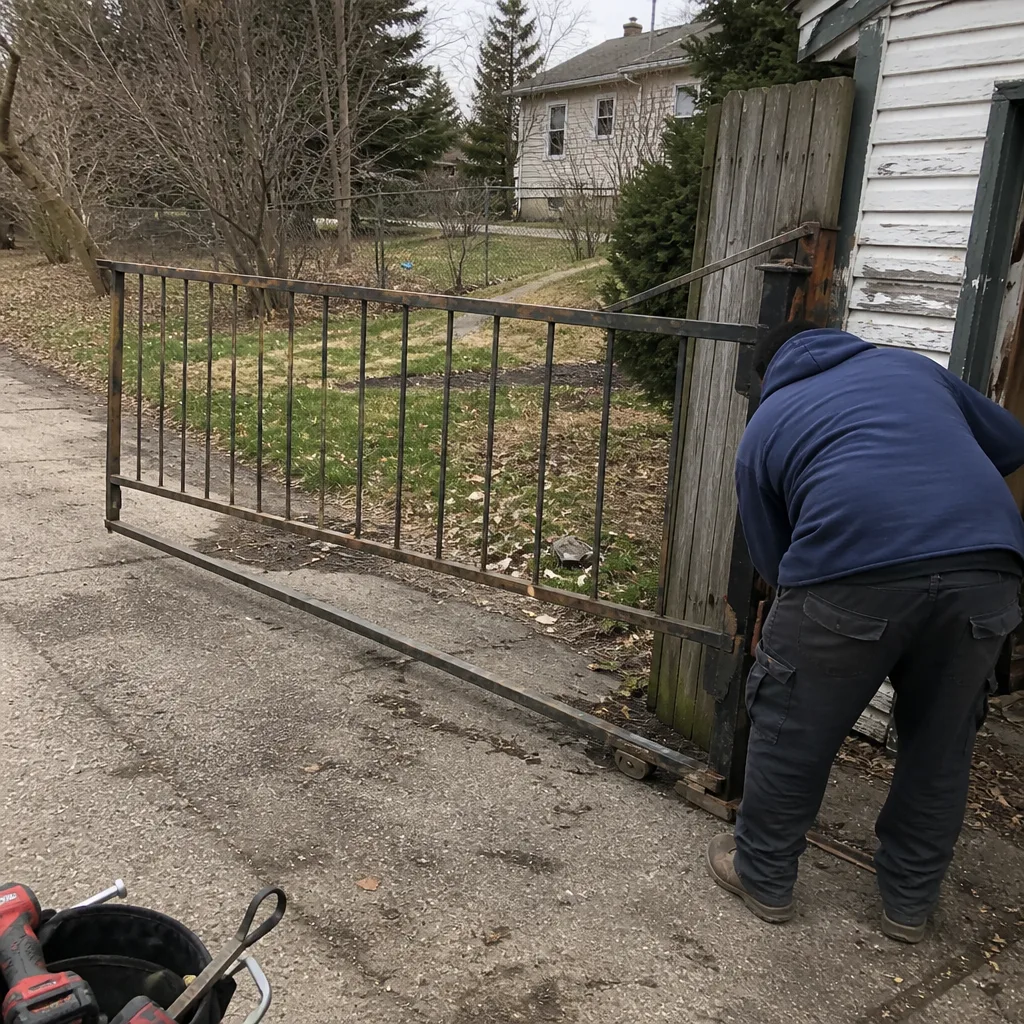
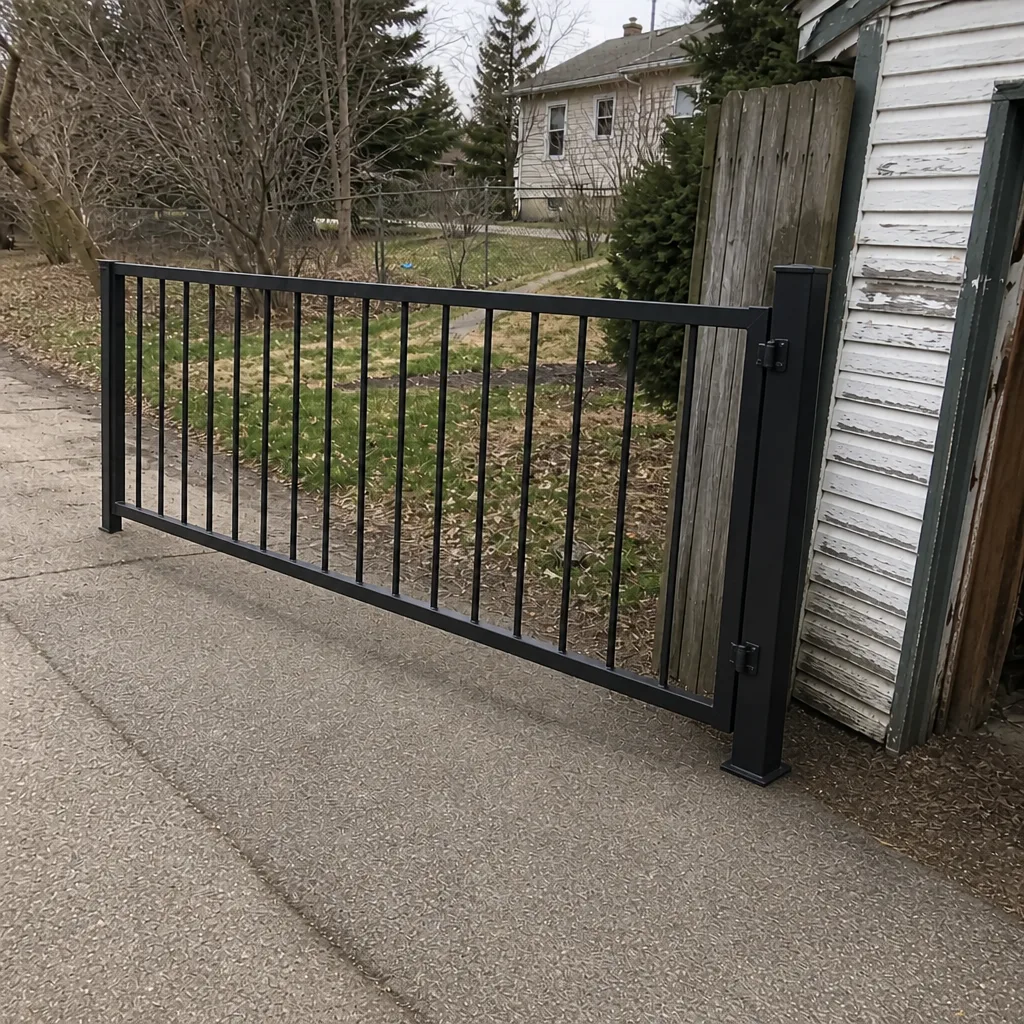
See the difference
 Before
 After
 Before
 After
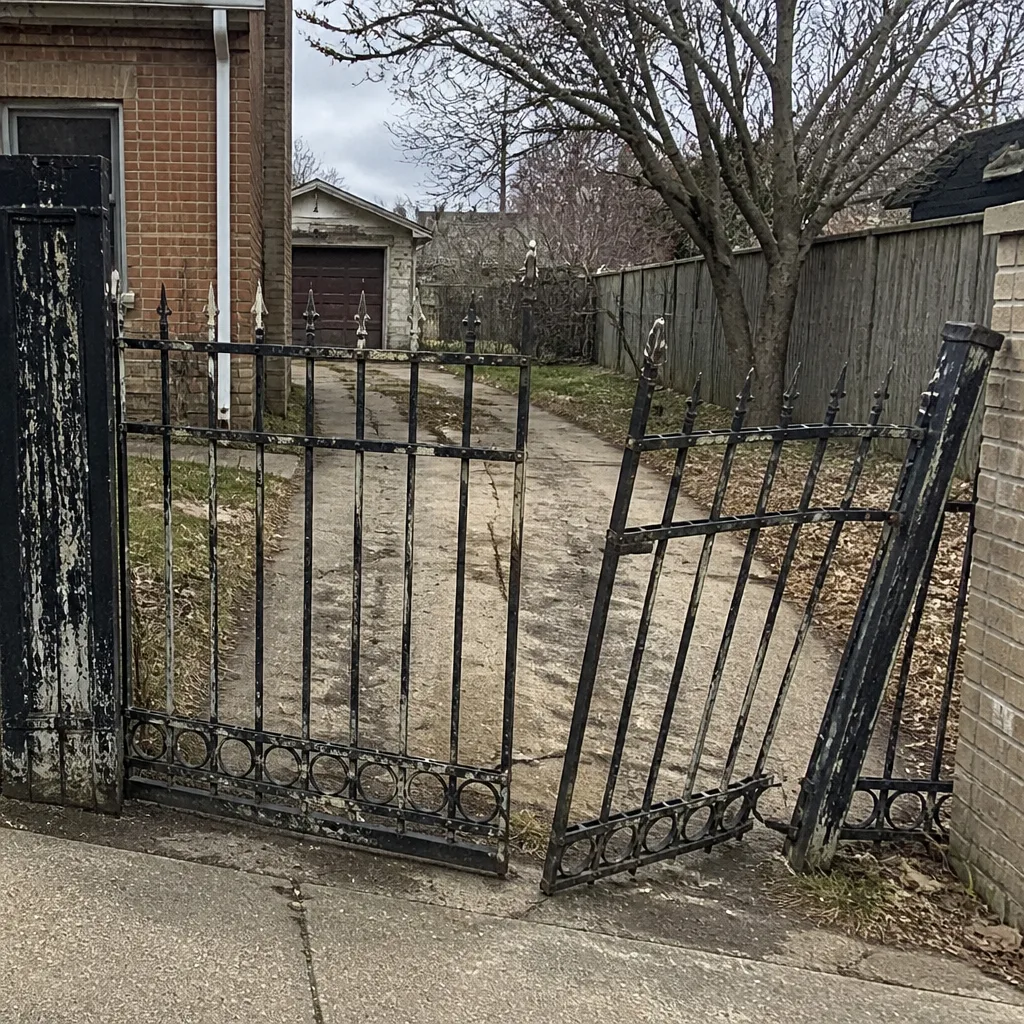 Before
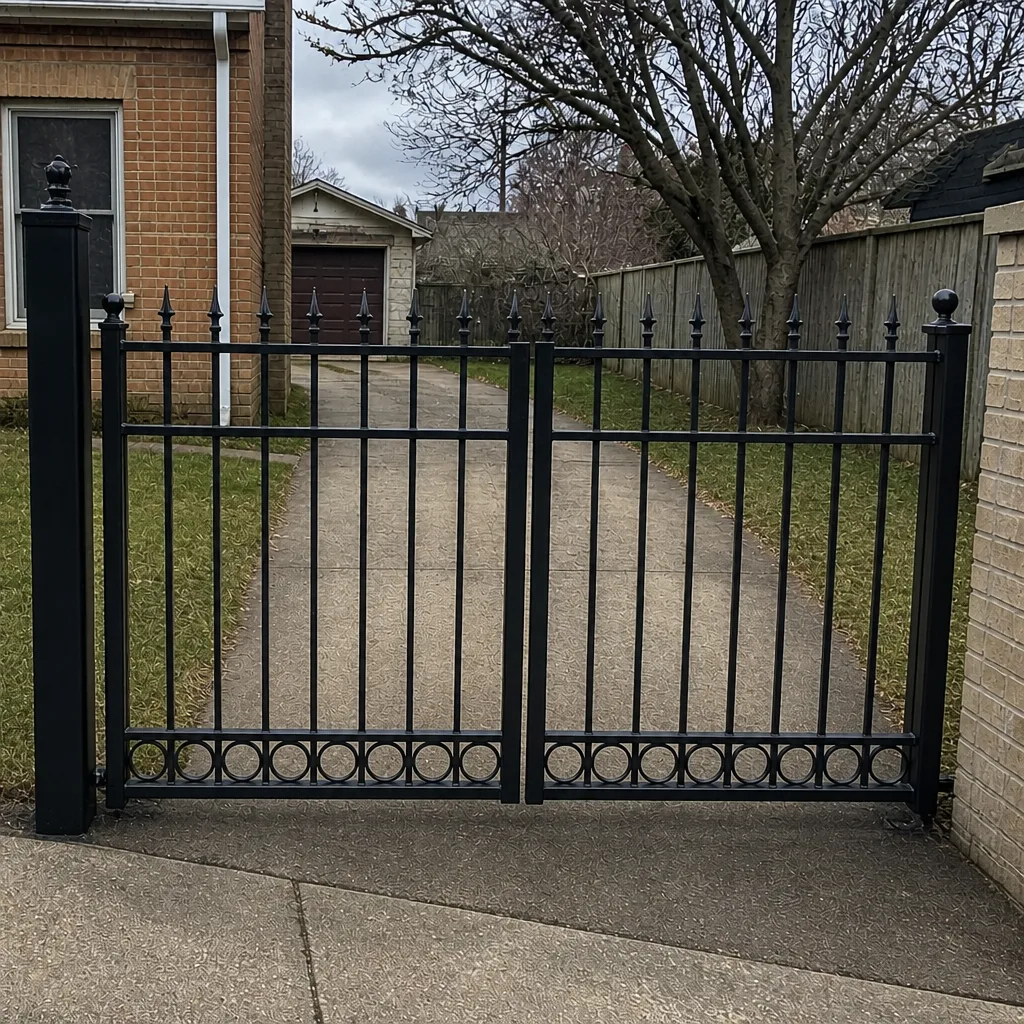 After