
Last updated November 15, 2026
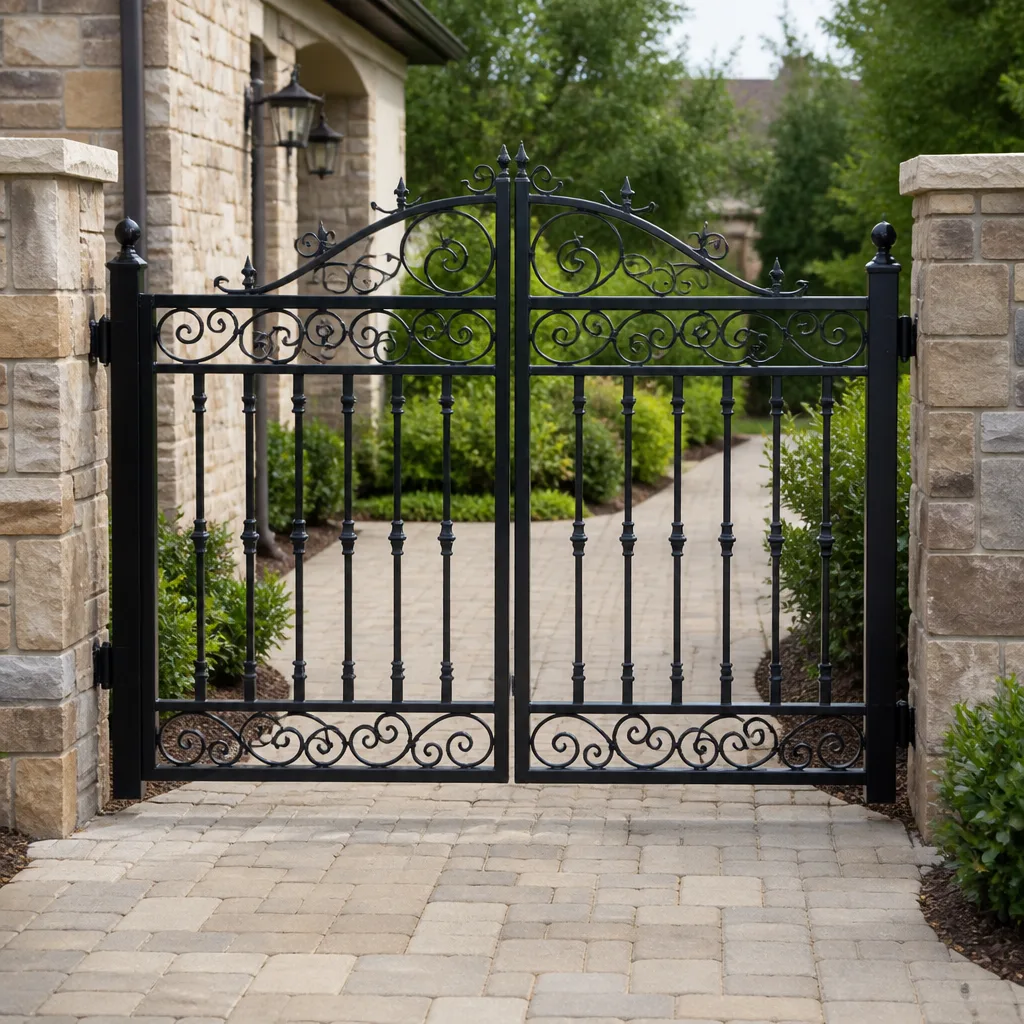 Wrought iron
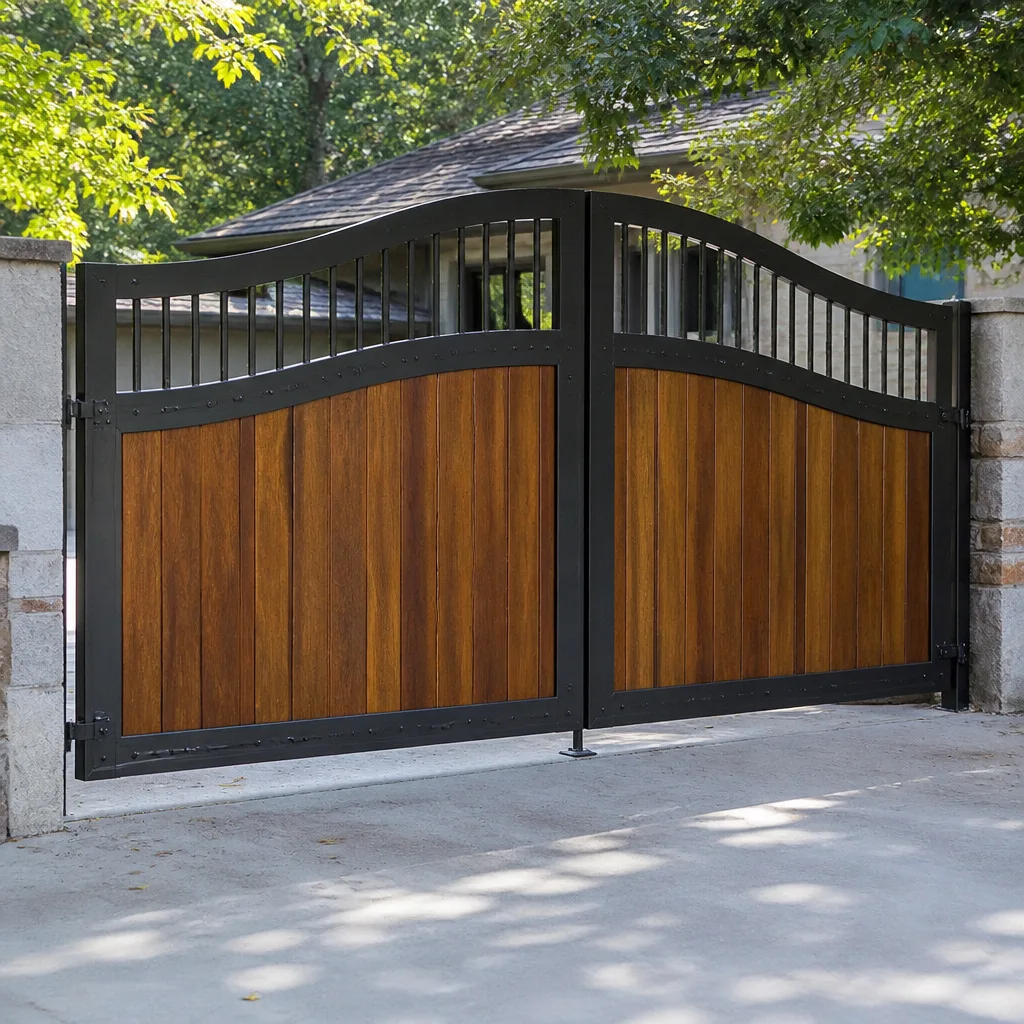 Wood & steel frame
 Farm & ranch
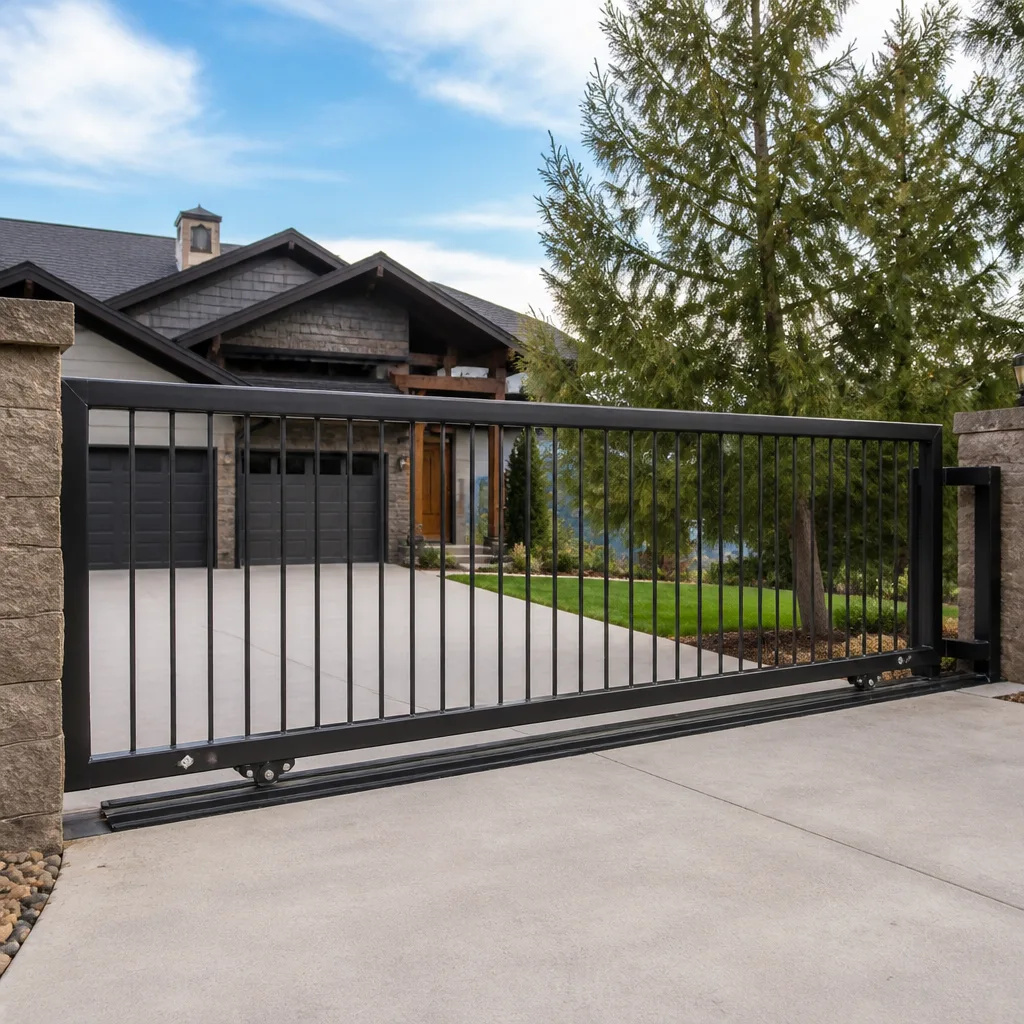 Sliding driveway gates
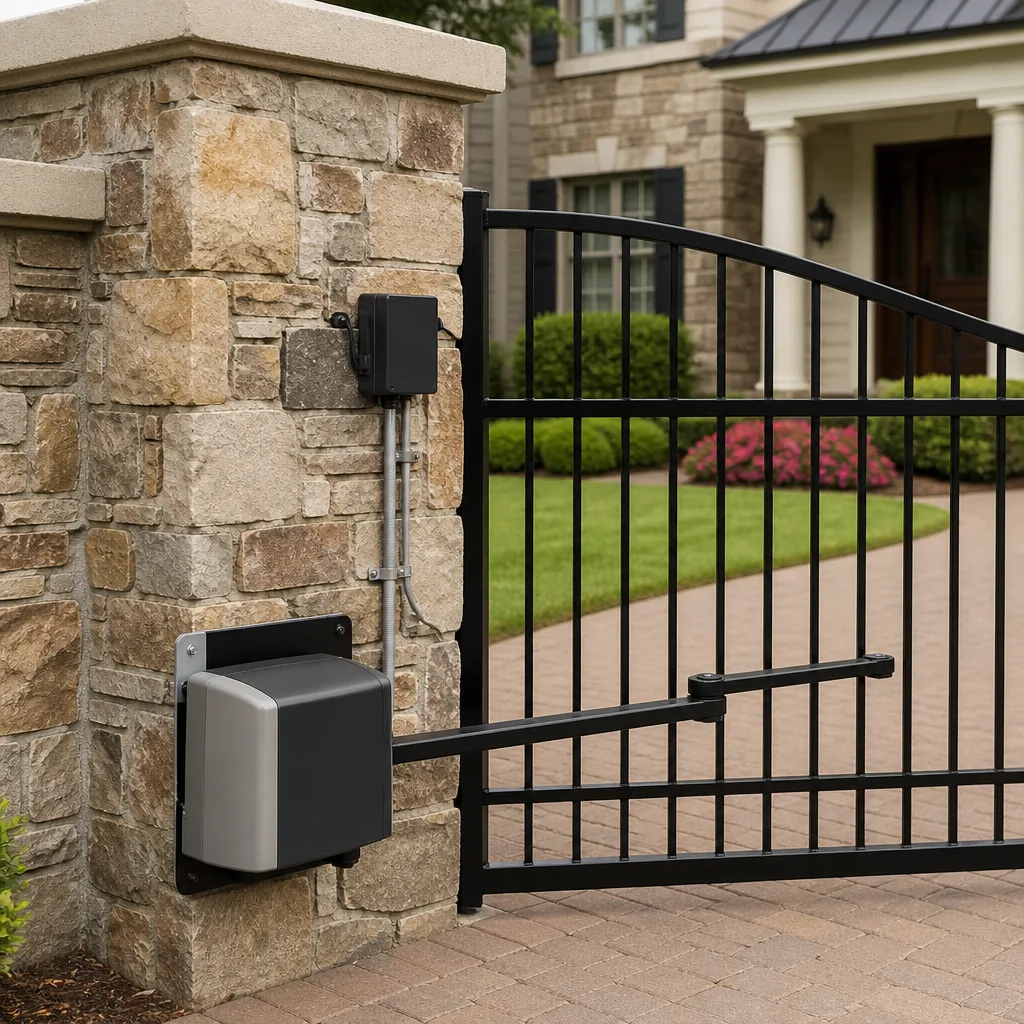 LiftMaster operators
Free on-site gate assessment - hinges, posts, and your LiftMaster or Nice gate operator checked before anything is quoted
The assessment is free and the quote is the invoice.
Get your free estimateGate Repair Troubleshooting in Elgin: Common Problems and How to Fix Them
Most people describe a broken gate the same way: “It just stopped working.” That’s honest, but it gives a technician almost nothing to work with. A gate that won’t open is talking to you, and it’s saying something specific. The arm moves but the gate doesn’t. The gate reverses halfway through closing. The keypad beeps but the operator stays silent. Each of those is a different failure, in a different system, with a different fix. This guide teaches you to read what your gate is telling you before you pick up the phone, so you know whether you’re looking at a motor, a control board, or a sensor problem. We’ll walk through the failure modes we see most around Elgin and the local conditions that bring them on.
Quick Answer
Most automatic gate failures in Elgin come down to five root causes: a power or control board fault, a motor or gearbox failure, a safety sensor or loop detector problem, a mechanical obstruction or misaligned hinge, or a battery or power supply issue. You can narrow it down yourself by watching what the gate does, or doesn’t do, when you trigger it. Knowing the category before you call means the technician arrives with the right diagnosis instead of starting from scratch.
Styles & brands we work with
- Wrought iron
- Wood & steel frame
- Farm & ranch
- Sliding driveway gates
- LiftMaster operators
Table of Contents
- The Five Root Causes of Gate Failure
- Control Board, Motor, or Sensor: Telling Them Apart
- Why Elgin’s Freeze-Thaw Cycles Wreck Pivot Points and Loop Wire
- Brand Quirks: LiftMaster vs. FAAC vs. BFT Error Signals
- The Two Homeowner-Safe Resets
- The Three Jobs That Always Need a Licensed Technician
- How to Document Your Failure Before You Call
- Seasonal Gate Maintenance for Elgin Property Owners
The Five Root Causes of Gate Failure
Every dead gate we see falls into one of five buckets. Learning which bucket yours belongs in is the fastest way to get it fixed. Here they are, with the symptoms that usually point to each.
- Power and control board faults. The operator has no lights, no beeps, no sound at all, or it clicks once and goes silent. The board is the brain of your system, and it’s often the first thing that fails after a power surge or a corroded connection.
- Motor and gearbox failure. You hear something running, but the gate doesn’t move, moves slowly, or moves with a grinding noise. The motor is trying, but the mechanical parts that transfer its force have given out.
- Sensor and loop detector problems. The gate opens but won’t stay open, reverses on its own, or doesn’t react when a car pulls up. On an electric gate repair call, this is the most common diagnosis because safety edges, photoelectric sensors, and underground loops are what tell the operator when to stop.
- Mechanical obstruction or misalignment. The gate drags, catches, or hits something on its travel. Hinges sag, wheels wear, tracks shift, and the gate physically can’t complete its arc.
- Battery, remote, or power supply issues. The gate works fine from the inside button but not the remote, or it only works after a long wait. The logic side of your system isn’t getting the signal or the power it needs.
The point isn’t to memorize a chart. It’s to walk outside, trigger your gate, and listen. In our experience, most property owners can place their problem in one of these categories in under a minute once they know what to watch for. That’s the difference between a useful phone call and a frustrating one.
Control Board, Motor, or Sensor: Telling Them Apart
This is the split that matters most, and you can make it from the outside without touching a screwdriver. Watch what the gate does when you press the remote, then compare it to the three patterns below.
Control board fault. The operator shows no life at all. No LED, no beep, no faint click, no attempt to move. On some systems the board will flash an error pattern, which is actually helpful: a blinking light is a code. If the board is completely dark, the first things to rule out are a tripped breaker, a dead backup battery, and a loose low-voltage wire at the terminal. When power is confirmed at the panel but the board is still dark, the diagnosis moves to the board itself.
Motor failure. You hear the operator running, but the gate doesn’t move or barely moves. That hum-and-stall pattern means the logic and power are reaching the motor, but the motor or gearbox isn’t producing usable force. A gate that moves slowly and heats up is showing the same failure earlier in the process. This is mechanical, not electrical, and it won’t clear on its own.
Sensor or loop issue. The gate starts, then reverses. Or it opens but won’t close. Or it closes on a car sitting in the driveway when it shouldn’t. That’s your safety system reporting a phantom obstacle. Photoelectric beams get knocked, spider webs and debris block them, and underground inductive loops crack or lose continuity at the saw line. The gate itself may be perfectly healthy; the safety logic is what’s stuck.
One quick test ties it together. If the gate moves normally with the remote but reverses unpredictably, lean toward sensor. If it makes noise but doesn’t travel, lean toward motor. If it’s silent and dark, lean toward power and board. None of this replaces an on-site diagnostic, but it puts you in the right conversation from the first minute, whether it’s gate repair or a full system check.
Why Elgin’s Freeze-Thaw Cycles Wreck Pivot Points and Loop Wire
Elgin sits in the Midwest freeze-thaw band, and that cycle repeats dozens of times through a single winter. Water gets into a gap during a mild afternoon, freezes overnight, and expands with enough force to shift metal. This is where gate troubleshooting in Elgin differs from what you’d read in a warmer climate, and it’s the single biggest reason we see certain failures here and not elsewhere.
The three components that take the most abuse are the ones the guides from the South never mention:
- Pivot points and hinges. Moisture works into hinge pins and pivot bushings, then freezes and expands. Over a season, that pushes hinges out of alignment and adds drag to the gate’s swing. A gate that ran smooth in October can start sagging and catching by February, and the fix is adjusting or replacing the pivot hardware, not the operator.
- Limit switches. These tell the operator where the gate’s travel stops. When cold and frost shift the gate’s frame or arm slightly, the limit switch should still respond accurately. Frost heave and ground movement throw off that reference, so a gate that worked last fall now over-travels or stops short, and the operator has to be re-taught its end points on site.
- Underground loop wire. An inductive loop is a coil of wire buried in the driveway, and it’s the piece that most often fails in our area once a moisture-filled crack freezes and opens further. The diagnostic tell is an intermittent signal: a car sits in the driveway and the gate stays closed, or the loop reads a phantom vehicle and holds the gate open. Repeated freeze-thaw at the saw line is usually why. That repair means cutting the driveway surface and re-splicing or replacing the loop, which is a job worth doing right the first time.
Elgin’s clay-heavy soil makes all of this worse. Clay holds water and swells when it freezes, then drops when it thaws, so the ground around a gate post is constantly moving. Posts set to proper footing depth are far less prone to heaving than a post that wasn’t, which is why a gate that’s been stable for years can suddenly wander off level. If a gate hasn’t been maintained for a couple of winters and it’s been sitting in this kind of freeze-thaw, that history alone explains most of what you’re seeing.
Brand Quirks: LiftMaster vs. FAAC vs. BFT Error Signals
Every operator you’ll encounter on our nine brands speaks its own diagnostic language, and reading the wrong manual wastes time. Here’s how the reporting style differs on the systems we see most around Elgin, and why the fix changes with the brand.
LiftMaster residential operators tend to blink a diagnostic LED pattern when something’s wrong, and the pattern tells you the specific area to check. That’s useful, but the code points at a category, not a part. It’ll tell you the board is seeing a sensor issue, then you still have to find which sensor and whether the beam alignment, the wiring, or the device itself is at fault. On Elgin properties with long driveways, that wiring run is often where the trouble actually lives.
FAAC and BFT swing and slide operators report differently, often through a combination of indicator behavior on the control panel and an error display that is more specific than a blink code. Their logic is oriented around travel and torque, so a fault often points at an operating condition rather than a discrete failed component. The result is a diagnosis that starts with the gate’s mechanical behavior and works backward into the board. When we’re called out on a FAAC or BFT system, getting the error history is as important as reading the current fault.
Linear sits toward the simpler residential and light-commercial end, with fault reporting that’s usually more direct. The common failure here is often in the wiring or the sensor, not inside the operator, which is a much cheaper outcome than a control board.
The practical takeaway: don’t go looking up “gate error code” generically. A LiftMaster blink pattern and a FAAC error display are not the same message and don’t point to the same fix. Tell the person answering your call the exact brand and model, plus the exact behavior you see, and the diagnosis starts in the right place. That’s our gate repair and electric gate repair approach in a nutshell: brand first, then the fault.
The Two Homeowner-Safe Resets
Before you call for service, there are two resets you can safely try on a stuck automatic gate. Both are reversible, neither touches high-voltage wiring, and each solves a real share of the calls we get. Do these only on the outside of the system, and only for mechanical or logic issues, never for electrical work.
Reset 1: Manual release. Most operators have a manual release key or lever that disconnects the gate from the motor so it can be moved by hand. This is how you get a gate open when the operator has failed, or how you check whether the gate moves freely when the motor isn’t fighting it.
- Before anything, look at your operator’s manual and confirm where the release is on your model. If it’s a commercial operator like a DoorKing, some units have a specific release procedure or a separate safety interlock you should follow first.
- Turn off power at the operator’s disconnect if your manual specifies it.
- Use the release per the manual, then gently push the gate through its full travel by hand. If it moves smoothly, the mechanics are healthy and your problem is electrical. If it fights you, drags, or grinds, the obstruction or pivot issue is the problem.
- Re-engage the release exactly as the manual directs, and restore power only once you’re clear of the gate’s path.
Reset 2: Obstacle sensitivity adjustment. The operator has a force limit that tells it when to reverse, and in our experience, the single most common sensor complaint is sensitivity set too high. A small thing like a fallen branch, a piece of debris, or a bit of ice on the track can trigger a reverse that looks like a sensor fault. Every operator provides a way to adjust that setting on its own logic, usually through a trim pot on the board or a menu setting. Check your manual for the specific method. Raise it slightly, test, and stop adjusting once the gate moves cleanly through its arc. It’s easy to over-adjust, so treat this as a fine adjustment and let the test run tell you when to leave it alone. If sensitivity changes don’t hold or the gate keeps reversing no matter what you set, that’s a sensor or wiring problem, not a setting.
That’s the end of what a homeowner should touch. Anything past the manual release and the sensitivity setting means opening the operator, tracing wiring, or working on the gate itself, and those are for a trained technician.
The Three Jobs That Always Need a Licensed Technician
Some gate work is a shop call, period. If you’re seeing any of the three situations below, stop and pick up the phone. The power and load on a gate operator can hurt you seriously if it isn’t handled correctly, and the parts that carry that load are not DIY territory.
- Anything inside the operator’s electrical enclosure. Control boards, capacitors, transformers, and any high-voltage wiring at the motor belong to a trained technician. The capacitors on some operators hold a charge even after power is off. Never open the enclosure to “have a look” at the board.
- Gate arm and operator mount failures. If the gate is drooping at the hinge, the arm has pulled loose from the gate, or the operator’s mount has shifted, the gate is bearing weight poorly. A heavy gate panel coming off its pivot or track can crush a hand or a foot. Keep clear of a gate that’s listing and call it in. The same caution applies to a commercial slide gate that’s come off its track behind a DoorKing or BFT operator.
- Underground loop and safety-edge repair. Restoring a damaged loop detector or safety edge means cutting, splicing, and re-terminating low-voltage wiring in the driveway and at the gate frame. Done wrong, you’ve got a gate that passes its self-test and then fails a child or a car when it matters. This is a job to do once and do right.
There’s also a fourth, subtler case: a gate that “works” but has an electrical quirk you can’t explain, like a keypad entry code that intermittently drops or an operator that seems to lose the remote pairing. That’s a logic and wiring issue for a professional.
The Safety Talk on All Gate Work
A properly functioning gate is a machine that swings hundreds of pounds on a hinge. When its safety system fails, it’s moving without knowing whether anything is in the way. Never stand in the path of a moving gate to “test” your sensor, and never bypass or wedge a safety edge to get a gate through the week. Keep the operator’s area clear, keep the gate’s path clear, and have a technician inspect the safety system any time the gate behaves unpredictably.
How to Document Your Failure Before You Call
You don’t need to be a technician to give a technician what they need. Two minutes of documentation turns a twenty-minute phone diagnosis into a two-minute one. Here’s the routine we recommend to every Elgin homeowner before they dial.
- Shoot a short video of the whole cycle. Press the remote, let it run from closed to the point of failure, and catch the behavior on camera. Show the gate and the operator together in frame when you can. Include the beeps, the reversal, and the hold position; each one is a clue.
- Photograph the error code exactly as it displays. Don’t summarize it, capture it. Board lights, error screens, and LED patterns are all read as code, so the position, color, and count matter.
- Note the brand and model. If you can read the label on the operator, photograph it. Mention the brand when you call, whether that’s LiftMaster, FAAC, BFT, or Linear. The brand sets the diagnostic path from minute one.
- Write one sentence on the pattern. “Reverses at the midpoint,” “runs but doesn’t move,” “goes silent after one click,” “only works from the wall button.” That single sentence plus the video usually gets us to a working diagnosis before we even arrive.
- Check the obvious first. Look for obstructions in the gate’s path, watch for a tripped breaker, and note whether the behavior is intermittent or constant. Intermittent usually points to wiring or loop; constant points to a discrete part.
We’re the specialists you’ll be talking to, not a call-center script, so this information gets used directly. On a property in Elgin, where overgrown brush, gravel, and driveways full of winter debris can all put a fingerprint on the problem before we’ve even arrived, that local context gets used too. If you’d rather just have us out, gate repair in Elgin calls are the core of what we do, and the diagnostic visit includes walking the system end to end rather than guessing at the component.
Seasonal Gate Maintenance for Elgin Property Owners
Most gate failures in our area have a season, and most of them are cheaper to head off than to fix. Here’s what to look at through the year, tied to what Elgin weather actually does to a gate system.
- Late fall, before the first hard freeze. Clear the gate’s travel path of leaves, twigs, and debris. Run the gate through a full cycle and listen for new noise or drag. Check that the manual release works and that the area around the operator is clear. This is the best time to catch a pivot problem that would otherwise turn into a winter failure.
- Through winter. Keep ice and packed snow off the track and out of the gate’s arc. Don’t chip ice with a metal tool against the gate or the operator. If your gate has a safety edge, don’t let snow pile up against it. If the gate reverses on its own after a freeze, take the video and call; loop and sensor issues after a hard freeze are exactly what we expect.
- Spring thaw. Walk the driveway and look at the saw line where any loop is buried. Watch for new cracks, dips, or soft spots that could have broken the wire underneath. Check the gate post for movement and the hinge for play. Spring is when the ground settles, and it’s when a gate that survived winter starts dragging.
- Throughout the year. Keep the gate area clear of pets and children when testing, have the safety sensors and edges checked on a regular basis, and avoid using the gate as a gatepost for a leaning ladder or a parked car that sits against it.
When you do need a technician, it helps to have a gate-only specialist on the other end of the call. Our technicians have up to 9 years of experience, and our focus is the whole lifecycle of a gate system: troubleshooting, repair, electric gate repair, and new gate installation when a failure turns out to be an upgrade call. We work with nine brands, from entry-level residential operators like Mighty Mule and Ghost Controls to commercial-grade systems like FAAC, BFT, and DoorKing, so your system is a known quantity rather than a learning curve.
Common Mistakes to Avoid
- Forcing the gate by hand while the operator is still engaged. A stuck gate might move if you push hard enough, but you’re transferring that force straight into the gearbox and the board. Release the manual first, then push.
- Holding the remote and pressing “reset” on whatever looks like a button. Random button combinations on an unfamiliar board can clear your travel limits or leave the operator out of calibration. If you don’t know what a setting does, leave it alone.
- Using a chain or a strap to “hold” a gate closed through a Midwest winter. It’s a common workaround on properties around Elgin, and it puts constant load on the operator and the hinges. If the gate won’t stay closed, that’s the fault to fix, not something to prop.
- Ignoring one intermittent failure. A gate that misses the loop every tenth car or reverses once a week is the early version of a harder failure. The same is true of a single dead spot that only appears on cold mornings. Intermittent loop and wiring faults get worse, not better, and they’re cheaper to catch before the wire fails completely.
- Bypassing a safety edge or disconnecting a sensor to get the gate working. Never do this. A gate that moves without its safety system is a hazard to every person and car in the driveway, and a technician should be the one to touch that system.
- Calling a general handyman for a control board fault. Gates are their own specialty. A technician who rotates between gates, garage doors, and general repairs is guessing at your control board, your loop, and your brand’s error logic. Call a gate-only specialist.
- Waiting until the operator has failed completely to schedule a look. One check of the hinges, the loop, and the safety system before winter usually costs less than a full repair, and a gate that’s serviced in fall is a lot less likely to strand you on the first hard freeze.
See the difference
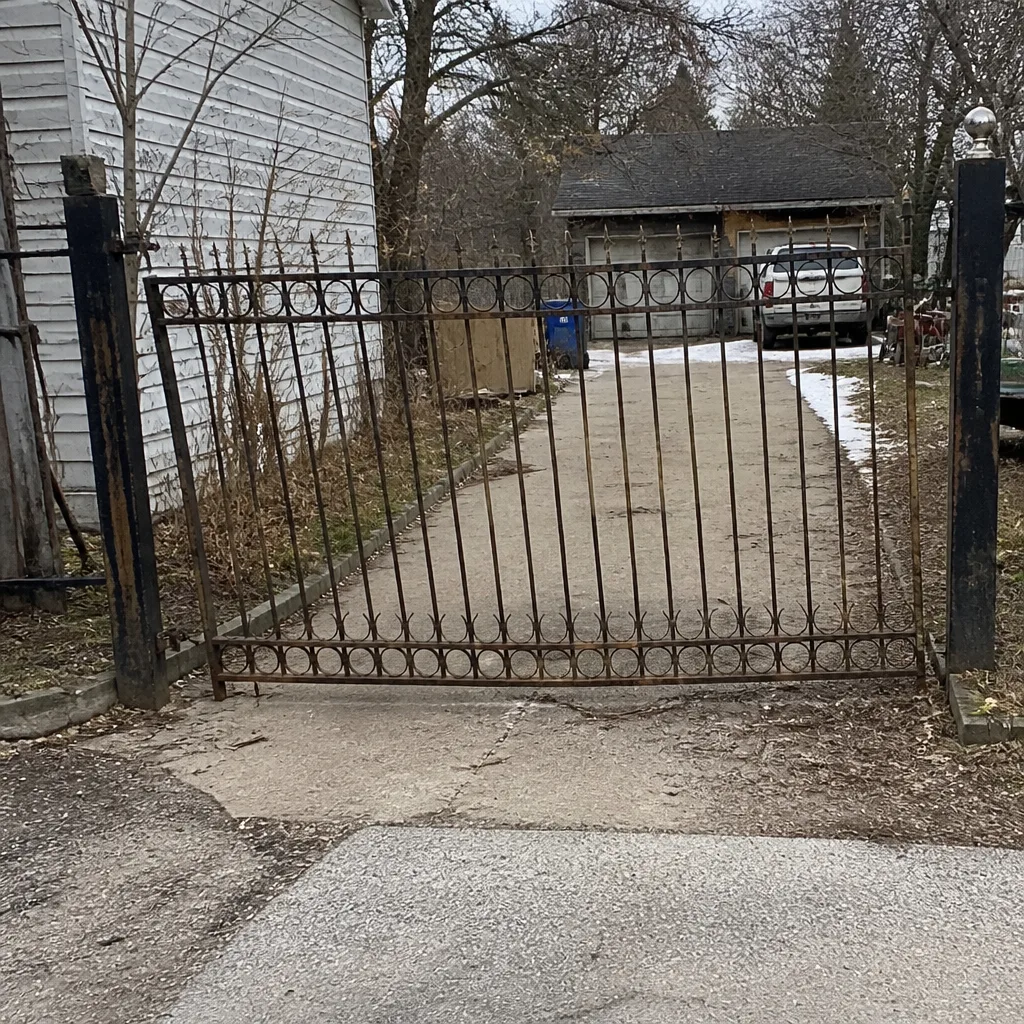 Before
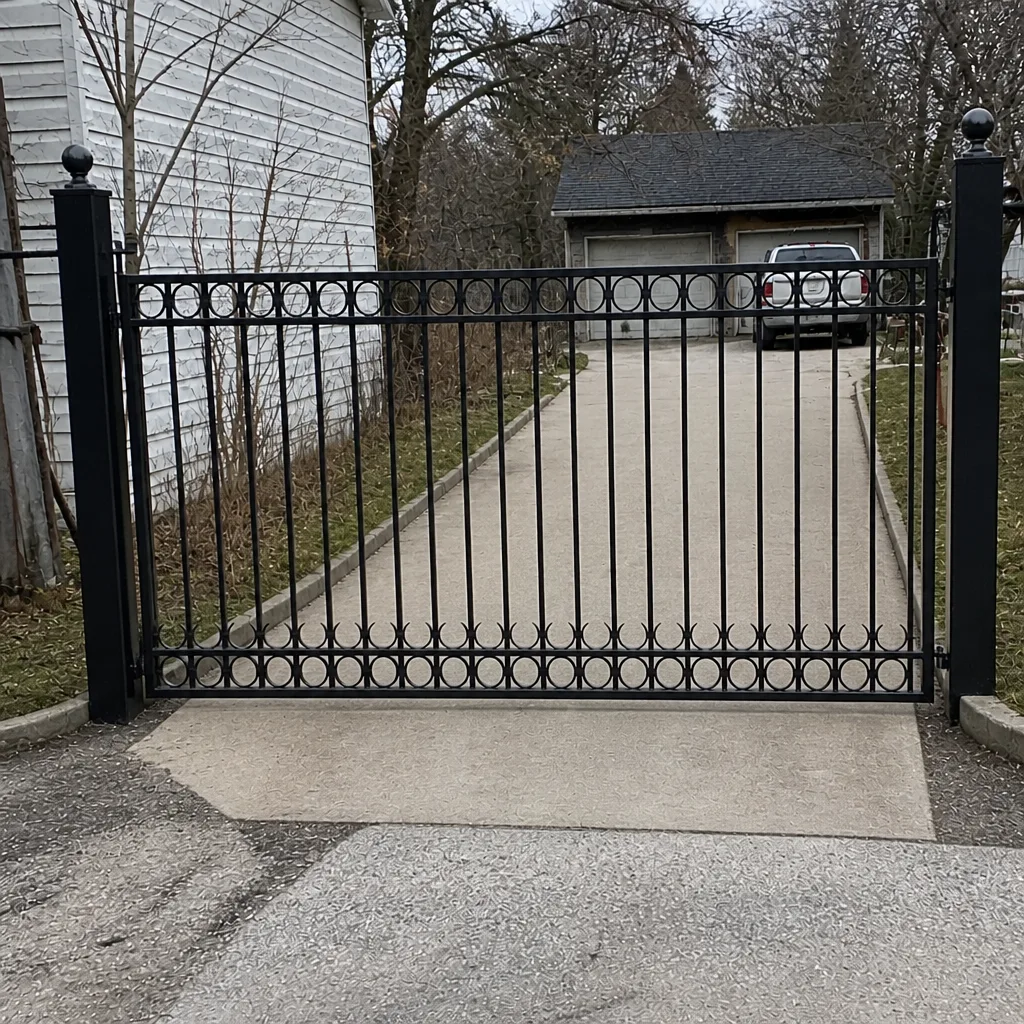 After
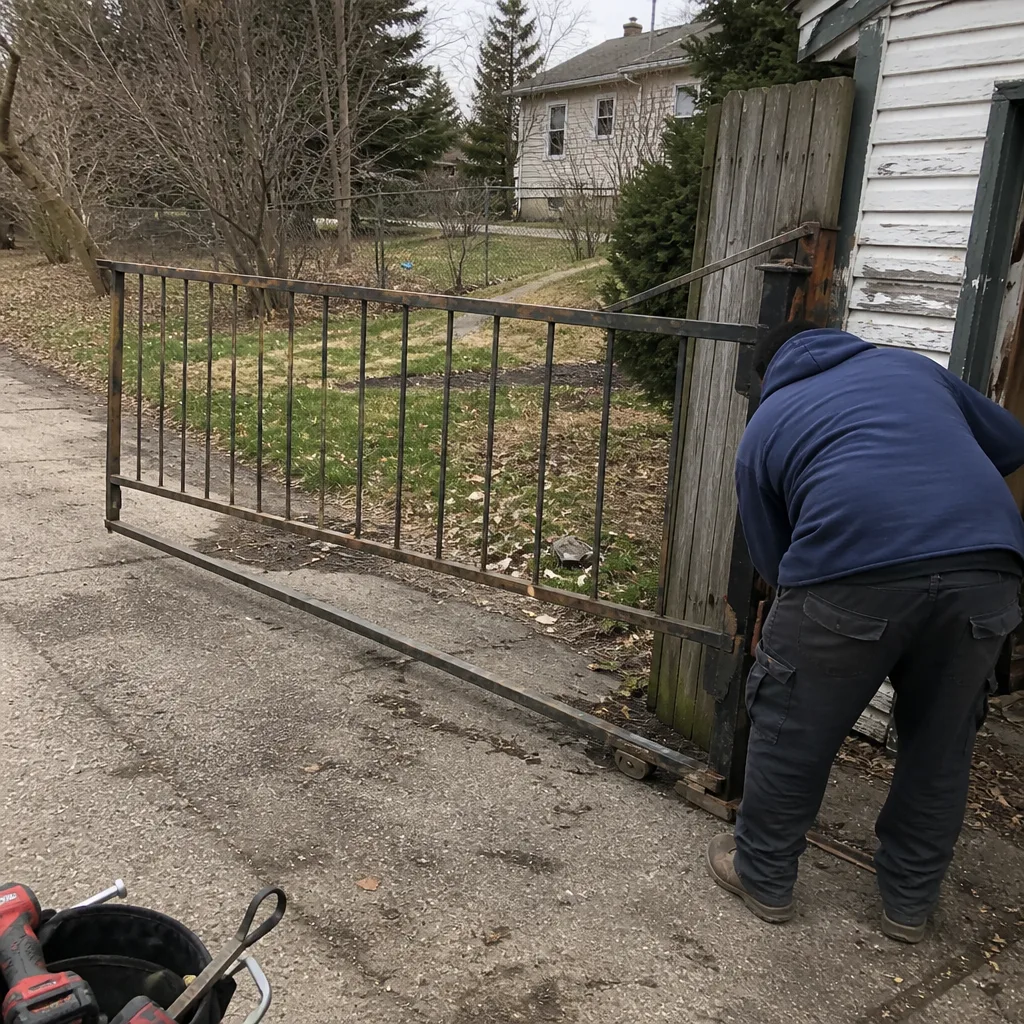 Before
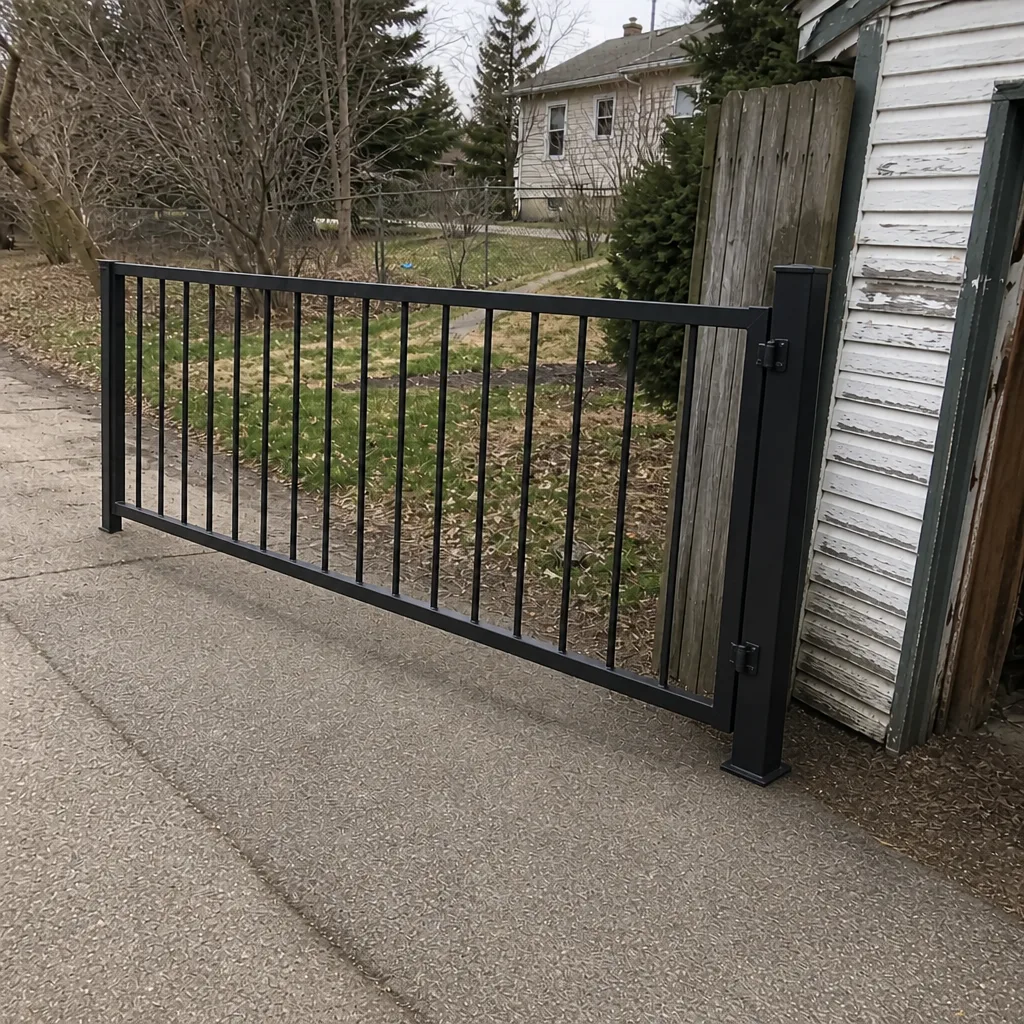 After
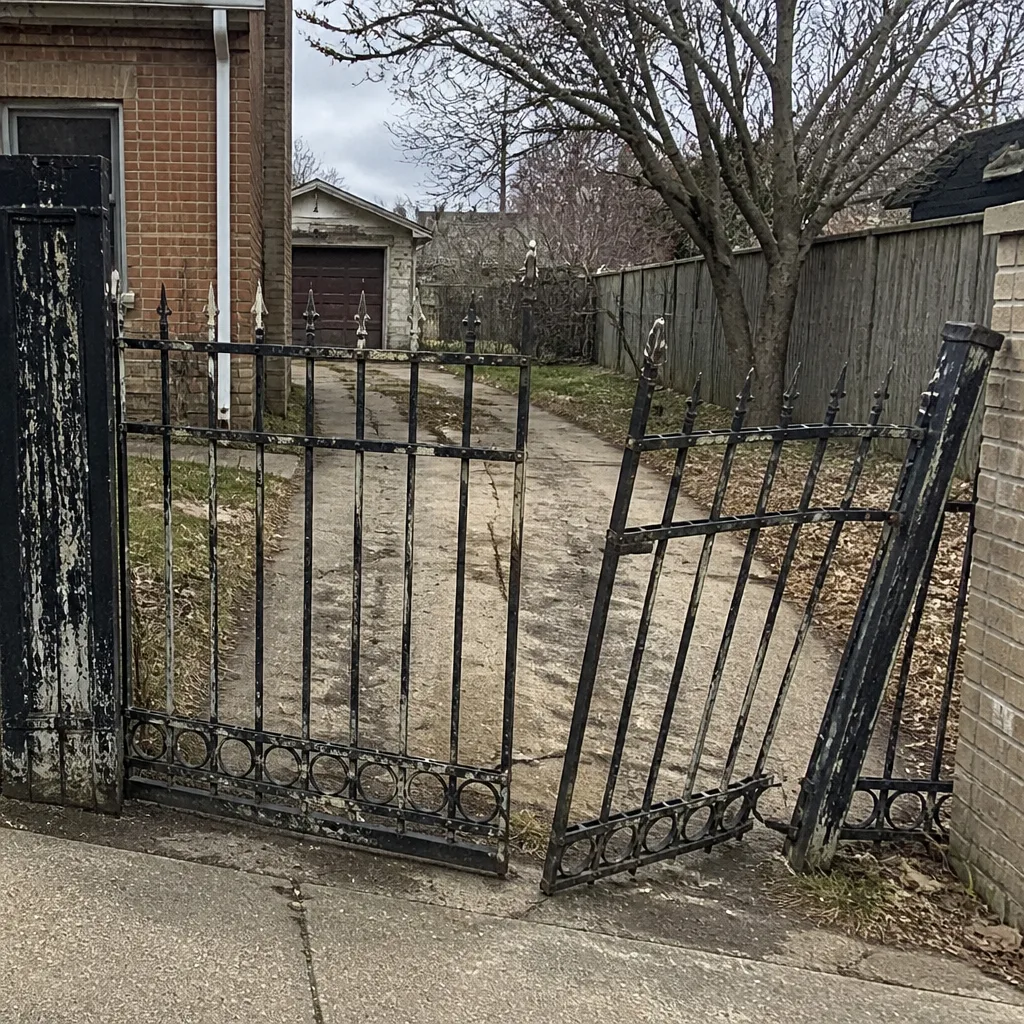 Before
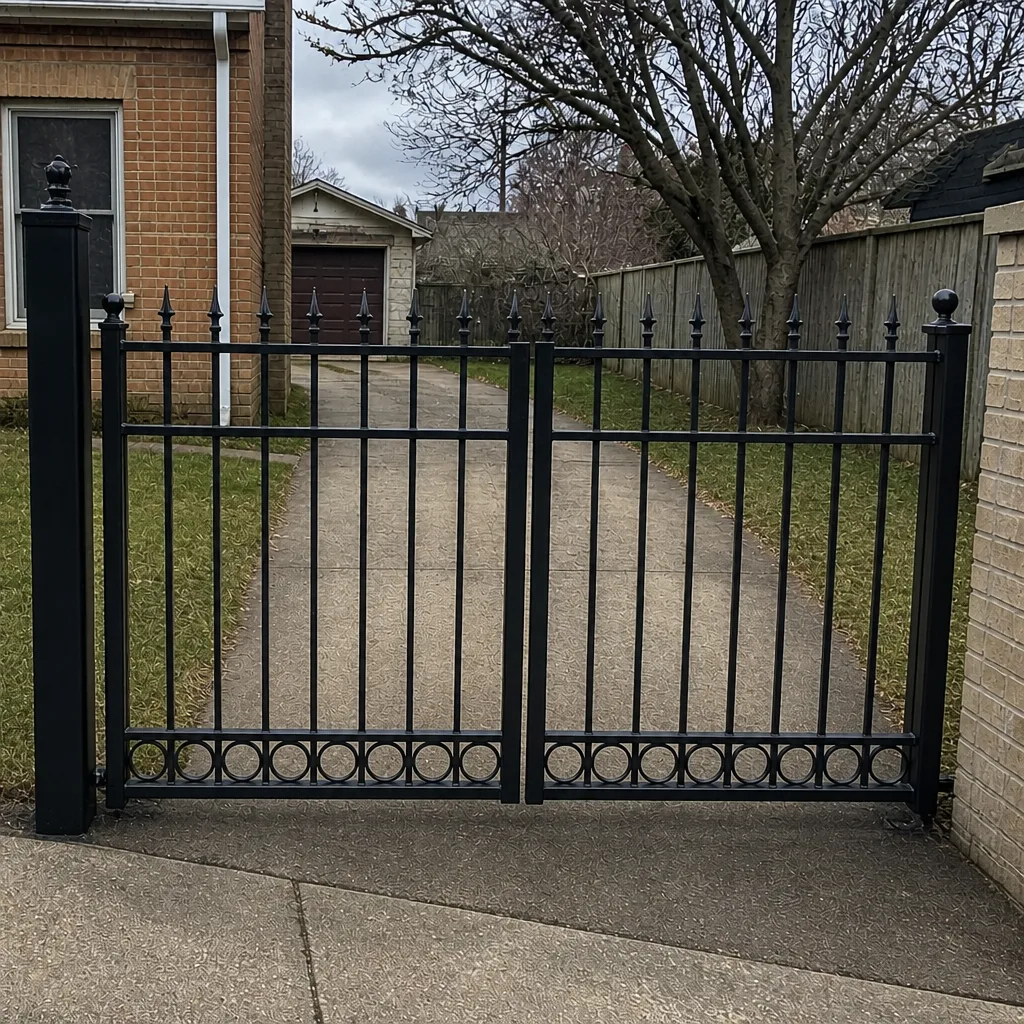 After
When to Call a Professional
Call when the gate makes noise but doesn’t move, because that’s a motor or gearbox failure and it won’t clear on its own. Call when it reverses or holds open without cause, especially after a freeze, because that points to a safety loop or sensor you shouldn’t fix yourself. Call when the operator is dark or shows an error code you don’t recognize, when the gate droops or the hinge is loose, or when you need a control board, capacitor, or underground loop repair, all of which carry real risk. And call when a gate on an access-controlled commercial property starts behaving unpredictably; that’s a security and safety issue at the same time.
We work on residential and commercial systems around Elgin, and we know the brand-specific behavior that makes each diagnosis faster. Gate Repair Elgin offers free estimates in Elgin. Call (833) 722-3856. We answer 24/7. Fast dispatch from 7am to 7pm, Sunday through Friday. Every price is quoted and agreed before any work starts, and the written estimate sets the final number, so there are no surprises when the invoice arrives. If a call comes in outside dispatch hours, it’s booked into the next opening, Sunday through Friday, 7am to 7pm.
Frequently Asked Questions
Listen to the operator when you trigger it. If you hear the motor running but the gate doesn’t move, or it moves slowly and grinds, the motor or gearbox is the likely failure. If the operator is completely silent and dark, with no beep or click at all, it’s a power or control board issue. Either way, don’t open the electrical enclosure. Call (833) 722-3856 for an exact quote. Estimates are free.
Freeze-thaw is usually the cause. A safety sensor gets knocked out of alignment, ice or debris triggers the obstacle detection, or an underground loop wire has cracked at the saw line after the ground swelled and settled. In our experience, that intermittent behavior after a hard freeze is one of the most common calls around Elgin. Call (833) 722-3856 and we’ll book a diagnostic visit. Estimates are free.
Yes, two things: the manual release, which disconnects the gate from the motor so you can check whether it moves freely by hand, and the obstacle sensitivity adjustment, which is usually a setting on the operator and solves a lot of false-reversal complaints. Beyond those two, leave the operator closed and the wiring alone. If neither clears the problem, call (833) 722-3856. Estimates are free.
We work with nine major gate brands: LiftMaster, FAAC, BFT, Linear, Viking, Ghost Controls, DoorKing, Elite, and Mighty Mule. That covers entry-level residential operators like Mighty Mule and Ghost Controls as well as commercial-grade systems like FAAC, BFT, and DoorKing, and we’re the gate-only specialists who know how each brand reports a fault. Call (833) 722-3856. Estimates are free.
Yes. We service residential driveway gates and commercial access-control systems around Elgin, and we troubleshoot the full range, from a single homeowner’s swing gate to gated access systems on a small commercial property. Each one gets the same diagnostic approach and a written estimate before any work starts. Call (833) 722-3856. Estimates are free.
Have the brand and model of the operator, a short video of the gate’s full cycle, and a one-sentence description of the pattern in hand. Photograph any error code exactly as it shows. That documentation takes a couple of minutes and usually shortens the diagnosis call to minutes instead of an hour. Call (833) 722-3856. Estimates are free.
The Bottom Line
A broken gate isn’t a mystery, it’s a message. Once you know the five root causes, you can place your symptom in the right category before you call: motor if it runs but doesn’t move, sensor or loop if it reverses or holds open, board or power if it’s silent and dark, and mechanical if it drags or catches. In Elgin, the freeze-thaw cycle stresses the hinges, the limit switches, and the loop wire harder than in warmer climates, and winter mornings bring out every weak point in a system. Do the two safe resets, avoid the three dangerous jobs, and document what you see. Then call a gate-only specialist who knows your brand. gate repair and electric gate repair are what we do all day, so a diagnosis is a conversation, not a guessing game. We answer 24/7. Fast dispatch from 7am to 7pm, Sunday through Friday. Call (833) 722-3856 for a free estimate.
Written by the team at Gate Repair Elgin.